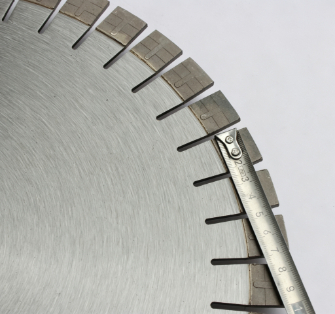

Dry cutting takes away the one thing a diamond blade relies on: water. With no coolant in the kerf, the segment-to-core joint, the bond and the steel core all run hotter, and dust removal has to happen on air alone. Only a handful of design decisions separate a blade that survives that environment from one that fails early.
By Steven Li, Director, ORIDAWN · Published 17 September 2026 · 6 min read
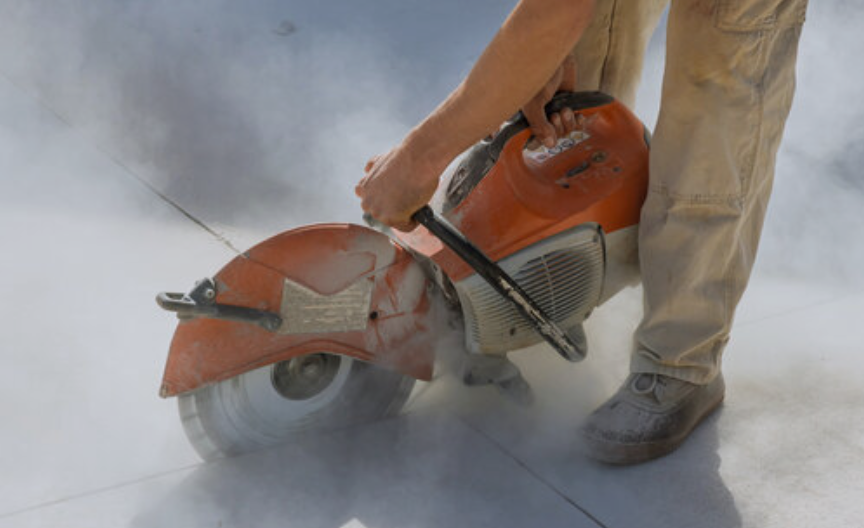
Dry cutting a cured concrete slab. With no water in the kerf, the joint, the bond and the core all carry more heat than they would on a wet cut.
On this page
1. What dry cutting does to a blade
2. The six design features that decide reliability
3. Design features and the numbers to demand on a datasheet
4. Eight questions to put to a supplier
5. What a reliable dry blade is not
A diamond blade cuts by controlled wear: the metal bond around each diamond wears back at a set rate, shedding blunt crystal so fresh crystal is exposed. Water supports that process in two ways — it carries heat out of the kerf and it flushes abrasive slurry away from the steel core.
Remove it and the same cutting action happens at a higher temperature, with grit held in the cut. The failure modes shift accordingly: joints soften, cores lose tension, segments dish or detach, and the blade glazes instead of cutting. A dry-cutting blade is therefore not a wet blade used without water — the design has to differ from the segment down to the core.
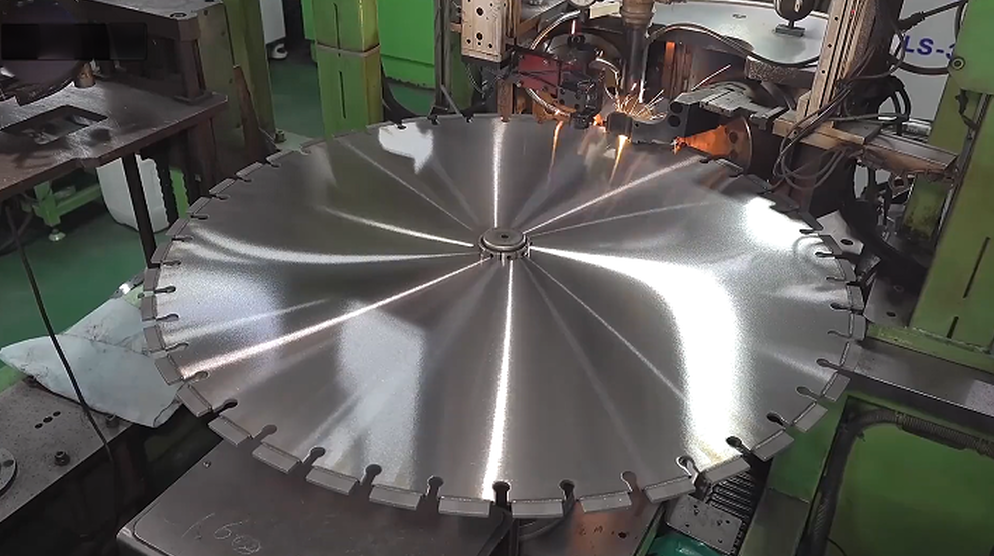
How the segment is attached decides whether the blade may be run dry at all. Brazed and silver-soldered blades depend on a filler metal: a silver braze softens from roughly 1,375 °F (about 745 °C), a temperature a petrol saw can reach on a dry cut long before the diamonds are spent. A laser weld fuses segment to core without filler, so the joint survives that heat. European practice under EN 13236 sets a segment load case of 600 N/mm² for laser-welded blades, and a minimum core hardness of 24 HRC for 230 mm blades. It is the joint we use across our laser-welded diamond saw blade range for exactly this reason.
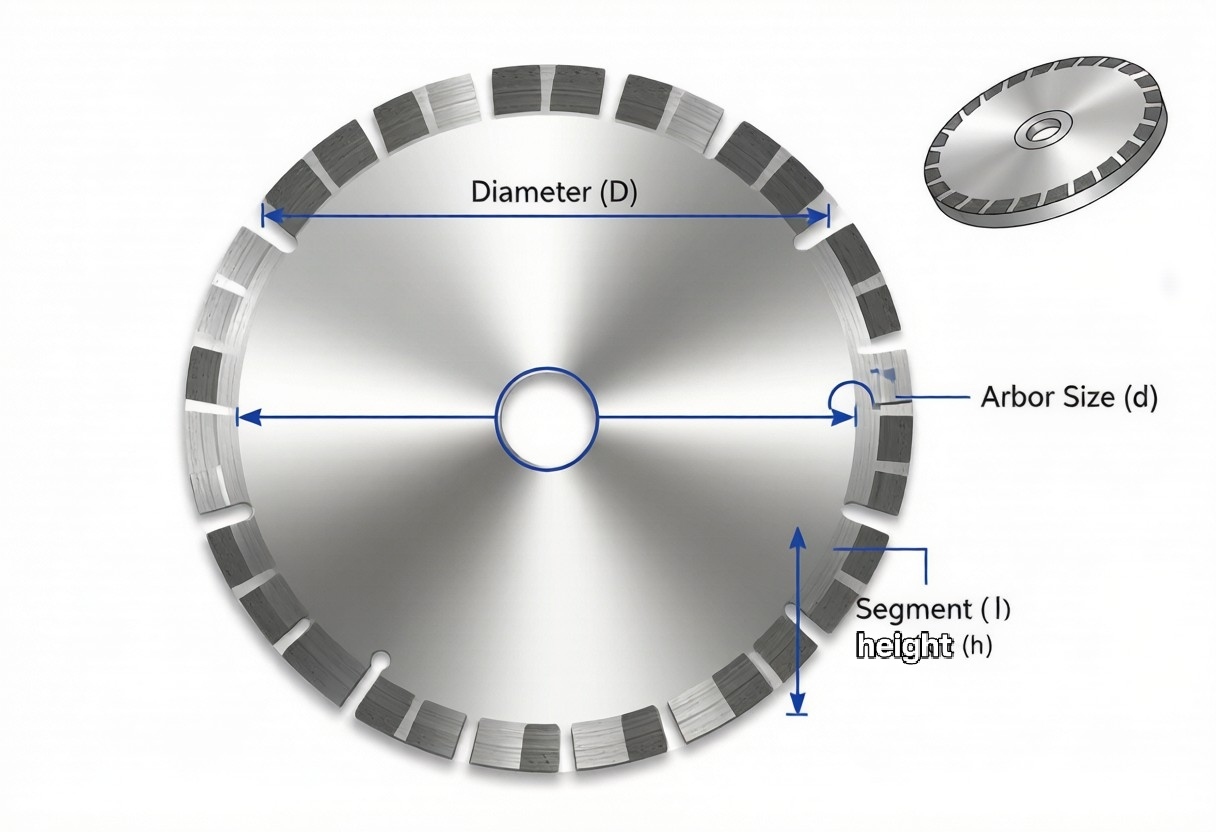
Segments are made wider than the core on purpose, so the cutting edge — not the steel — takes the load. That side clearance is what stops a dry cut becoming metal-on-stone wear. Segment height is often read as blade life. It is not: a 10 mm segment carrying a properly loaded diamond mix can outlast a 15 mm segment with a lean one. For dry work, diamond concentration and grit size relative to the material matter more than height alone.
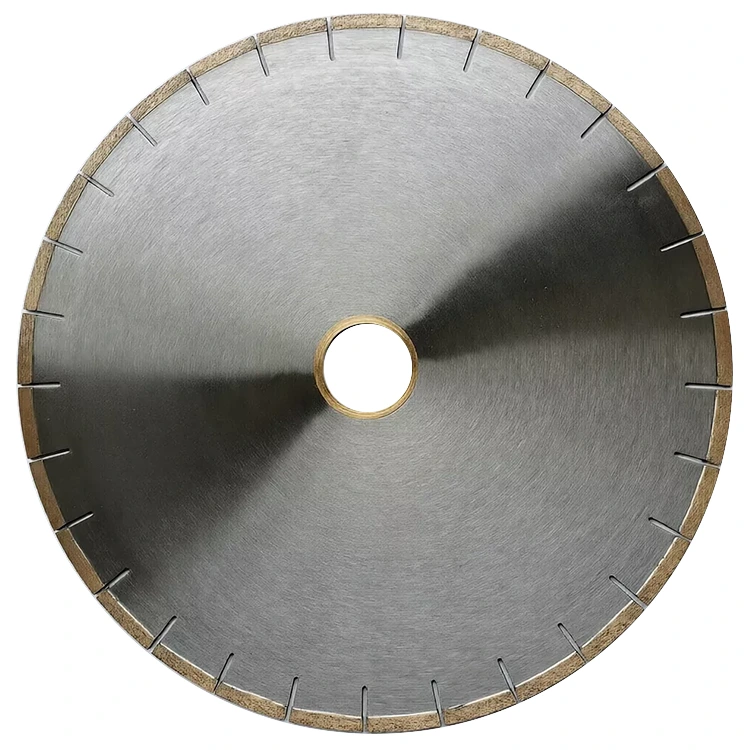
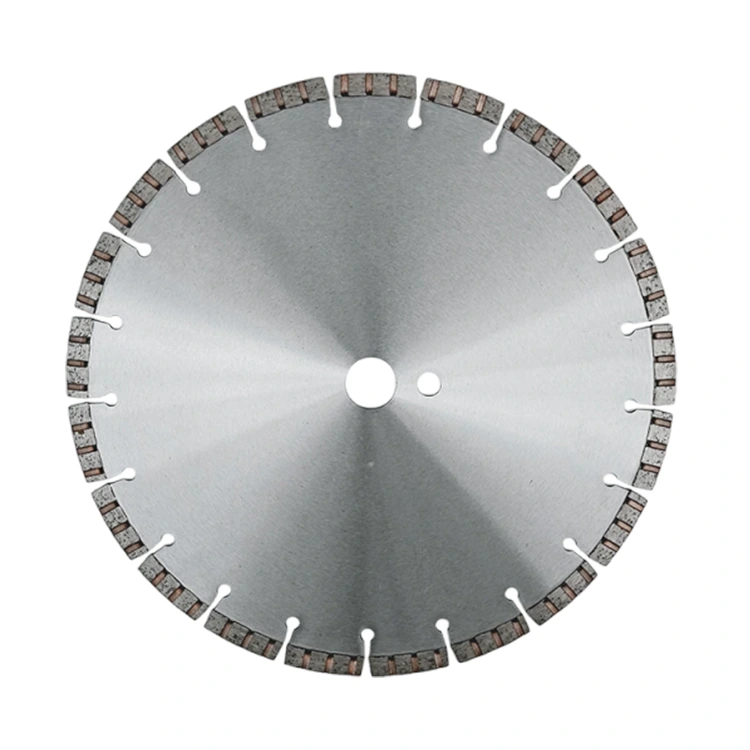
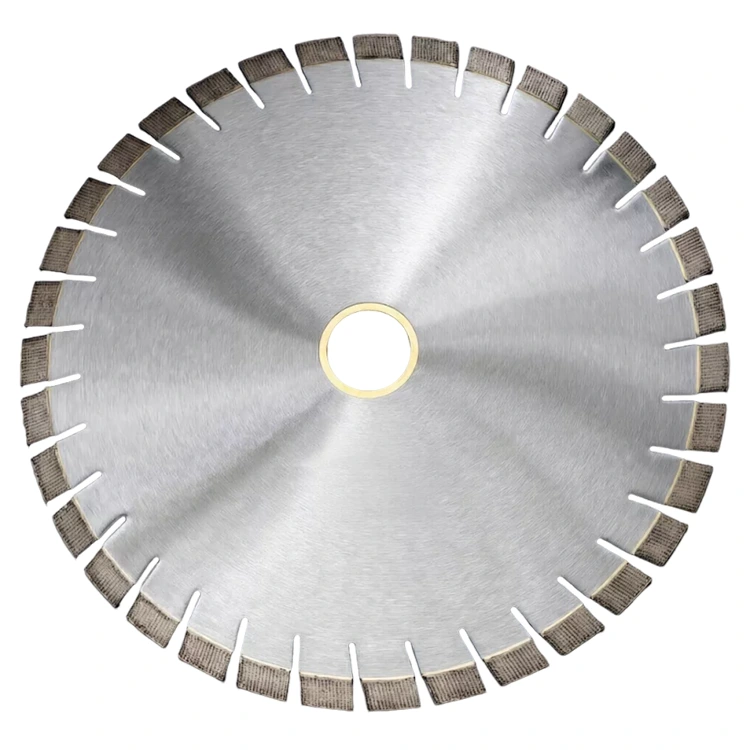
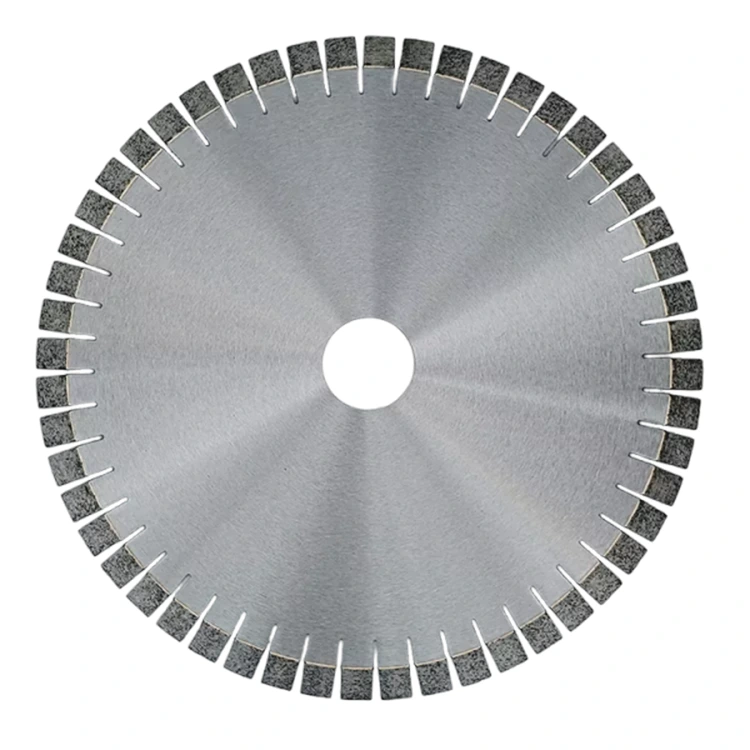
The gaps between segments are the only cooling and clearing system a dry blade has. They pull air through the kerf, carry dust and slurry out, and allow the core to flex rather than crack. Open geometry suits high volumes of abrasive dust, which is why wide U-slots and key slots are typical for asphalt and green concrete — the slot pattern used on our concrete and asphalt cutting blades. Narrower slots are used for dense stone such as granite, where dust volume is lower and the load on the core is higher.
Undercutting is wear on the steel core immediately below the segment, caused by abrasive slurry passing through the kerf. Once the core thins below the segment, the segment loses its support and can leave the blade. Segments extended deeper into the core — drop segments or protective teeth — clear slurry away from that joint and keep the support metal intact. It is an inexpensive feature that prevents the most expensive failure.
Bond hardness is the matching rule most often ignored in dry cutting. Hard, dense material barely wears the bond, so it needs a softer bond that releases dull diamond; abrasive material wears the bond quickly, so it needs a harder bond that holds diamond longer. Choose wrongly in either direction and the blade either glazes over or wears out in a shift.
The core is where dry cutting is usually lost. It should be hardened and heat-treated steel, tensioned so it runs true, and flat enough that runout stays inside tolerance. Vibration is not only a comfort problem: excessive runout and lateral load are recognised precursors of kickback on hand-held saws, which is why the FEPA safety leaflet for diamond saws treats a damaged or distorted blade as a stop-work condition. Before any dry blade goes on a machine, check flatness, cracks at the slot ends, missing segments and core thinning below the segment.
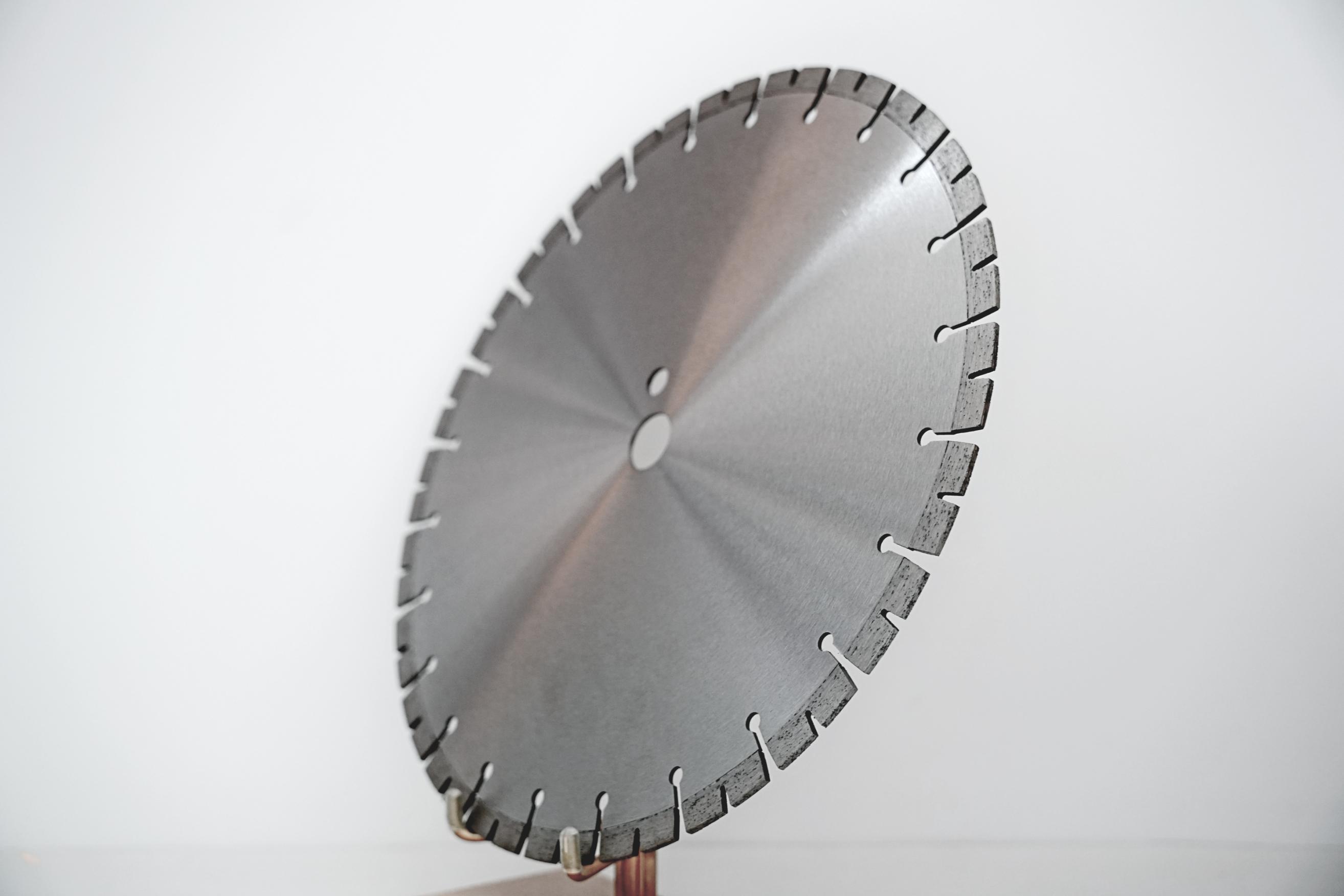
Macro view of a laser-welded segment and the gullets beside it — the two features that decide how a dry blade manages heat and slurry.
|
Table 1 — What each design element protects, and the specification that proves it. |
||
|
Design element |
Failure it prevents |
What should appear on the datasheet |
|
Laser-welded segment joint |
Segment loss when the joint reaches braze temperature |
Weld method, plus the EN 13236 segment load case (600 N/mm²) |
|
Segment geometry and side clearance |
Core rubbing, poor penetration, premature scrapping |
Segment width against core thickness; diamond concentration and grit size |
|
Gullet and slot geometry |
Overheating, binding, core cracking |
Slot type (key, narrow U, wide U) and slot count |
|
Undercut (drop) protection |
Core erosion and segment detachment in abrasive material |
Whether protection teeth are fitted, and to what depth |
|
Bond hardness |
Glazing in hard material; rapid wear in abrasive material |
Bond code and the material range it is formulated for |
|
Hardened, tensioned core |
Runout, vibration, kickback |
Steel grade, hardness in HRC, flatness and tension specification |
1. Is the segment laser-welded, brazed or sintered — and can you show the weld test record?
2. What is the maximum operating speed in m/s, and the matching rpm marked on the blade?
3. Which EN 13236 restriction-of-use code applies to this blade?
4. What are the segment height and diamond concentration, and which material range is the bond formulated for?
5. Which slot geometry is cut into the core, and why that one for this application?
6. Do the segments include undercut protection, and to what depth?
7. What is the core steel grade and hardness, and how is tension verified before dispatch?
8. What is the traceability code, and how does it link back to the production record?
One detail worth adding to that list: bore sizes have to be exact. A 7/8 in bore is 22.23 mm — not 22 mm. An approximate bore puts lateral load into the blade from the first cut.
Not a wet blade sold without water. If the blade carries a wet-only restriction code, running it dry does not remove the safety margin — it removes the assumption the blade was designed around.
Not an unmarked blade. Under EN 13236 a blade must carry the declaration of conformity, dimensions, maximum speed in m/s and rpm, direction of rotation, restriction of use, manufacturer or brand, and a traceability code. Without them there is no documented conformity to point to if something goes wrong.
Not the cheapest blade per unit. Cost per cut is the number that matters. On a dry site, a low-cost blade with a brazed joint is usually the most expensive option in the store cupboard.
For buyers importing into the United States. Diamond sawblades and parts from China are subject to anti-dumping and countervailing duty orders (case A-570-900) and are typically entered under HTSUS 8202.39.00. Cores with a Rockwell C hardness below 25, and blades outside the thickness range stated in the order, fall outside its scope. Confirm the producer's position before you book the shipment rather than after.
1.Can a diamond blade designed for wet cutting be used dry?
Usually only at a cost. A wet-design blade is limited by its segment-to-core joint: brazed and silver-soldered blades are not safe for dry running, because the joint can soften well before the diamonds are worn out. If a blade is not marked for dry use, treat it as wet-cutting only.
2.Does a taller segment mean a longer blade life?
Not by itself. A 10 mm segment with a properly loaded diamond mix can outlast a 15 mm segment with a lean one. What matters in dry cutting is the diamond concentration and grit size relative to the material, plus enough segment height that the blade is not scrapped before the weld zone is reached.
3.Why do dry-cutting blades have slots between the segments?
The gullets between segments are the only cooling and clearing system a dry blade has. They pull air through the kerf, carry dust and slurry out, and let the core flex instead of cracking. Wider, more open slots suit abrasive material such as asphalt and green concrete; narrower key slots suit hard, dense stone where dust volume is lower.
4.What is undercutting, and how do drop segments prevent it?
Undercutting is wear on the steel core immediately below the segment, caused by abrasive slurry passing through the kerf. Left unchecked, it thins the core until the segment loses its support and leaves the blade. Drop segments, also called protective teeth, extend deeper into the core and clear slurry away from that joint.
5.Which EN 13236 markings should I check on a dry-cutting blade?
Check that the blade carries the EN 13236 declaration of conformity, the maximum operating speed in m/s and rpm, the dimensions, the direction of rotation, the restriction-of-use code, the manufacturer or brand name, and a traceability code. A blade missing any of these has no documented conformity you can point to.
6.Is wet cutting still better, even with a dry-rated blade?
Yes, whenever water is available. Wet cutting lowers blade temperature, suppresses dust at source and normally extends segment life. A laser-welded dry-rated blade keeps its place on sites with no water supply, in rescue and utility work, and in cold weather where water freezes or disposal is impractical.
-