
Most diamond blade disputes between importers and factories are not arguments about price. They are arguments about vocabulary. A purchase order that says “hard bond, standard rim, 350 blade” can be read four different ways by four different suppliers — and you only discover which reading was correct after the container arrives.
What this glossary gives you. Thirty terms, grouped into the five areas where misreading costs the most money: blade anatomy, the diamond and bond system, welding and manufacturing, segment profiles and performance, and the trade and compliance layer. Each entry gives the English term, the Chinese equivalent your supplier is likely using, a plain definition, and the commercial consequence of getting it wrong.
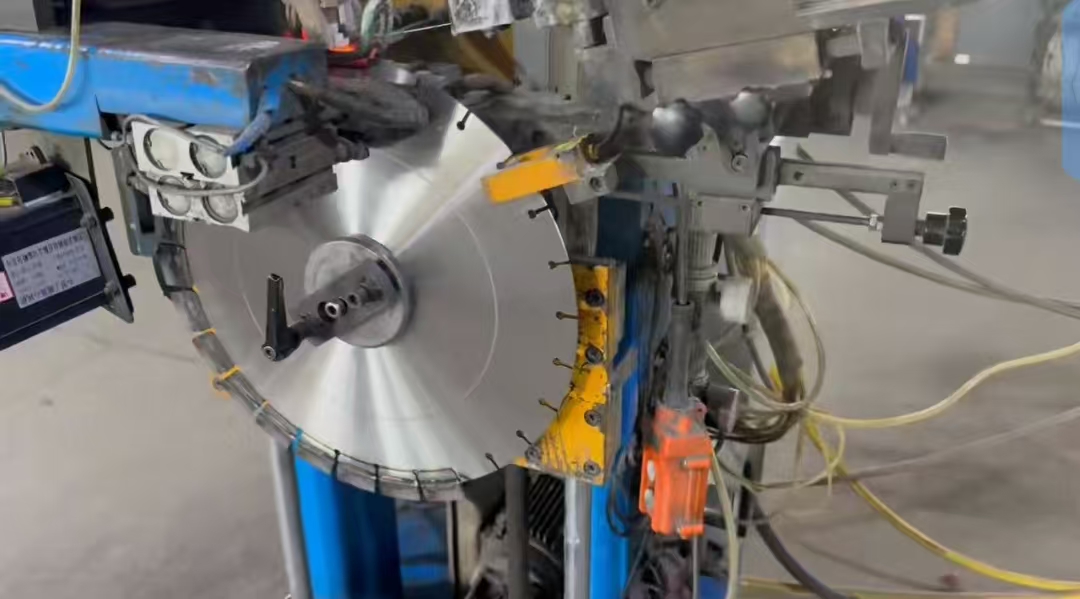
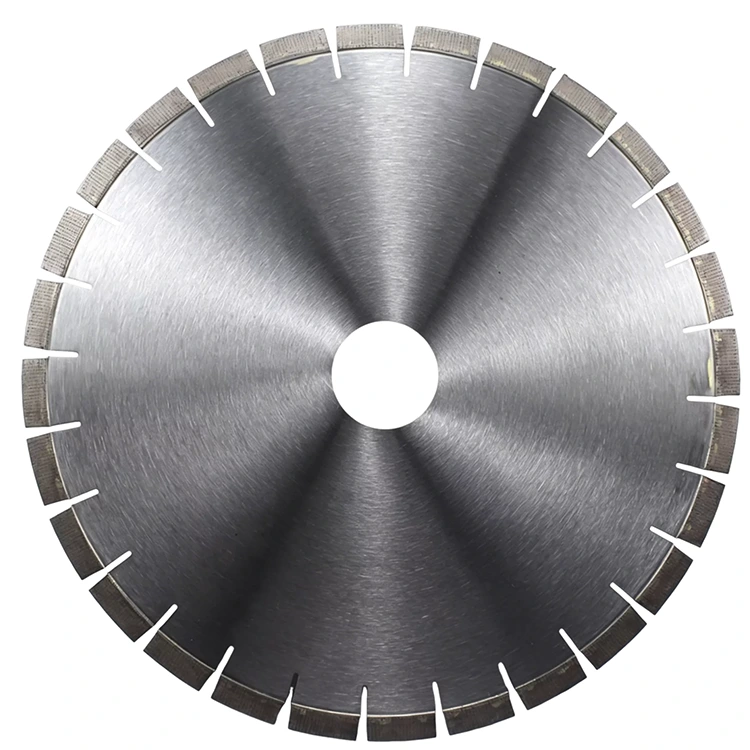
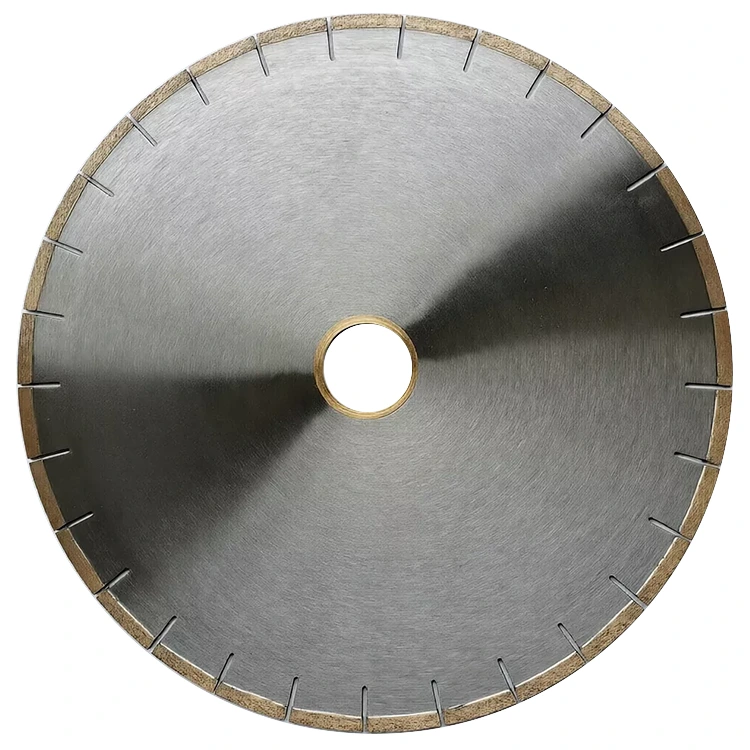
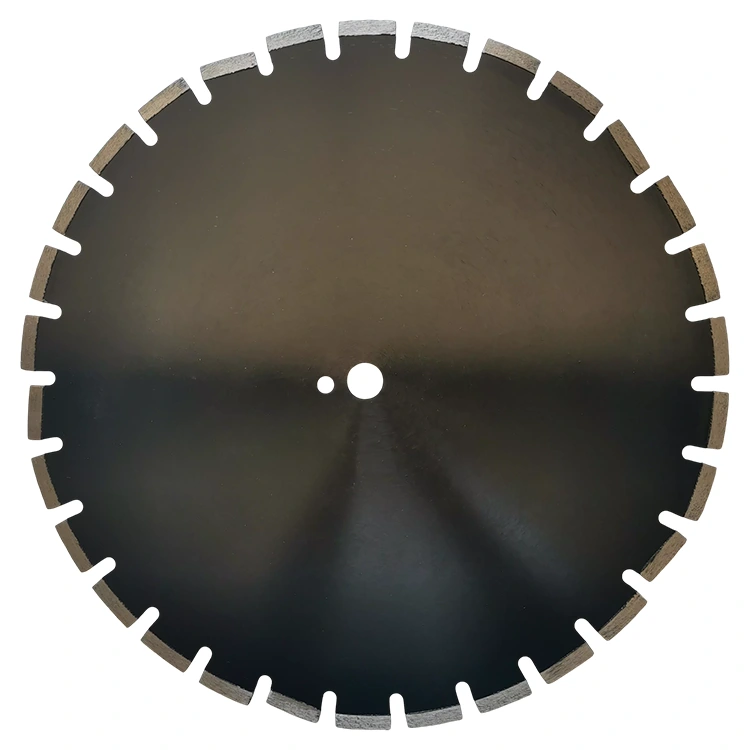
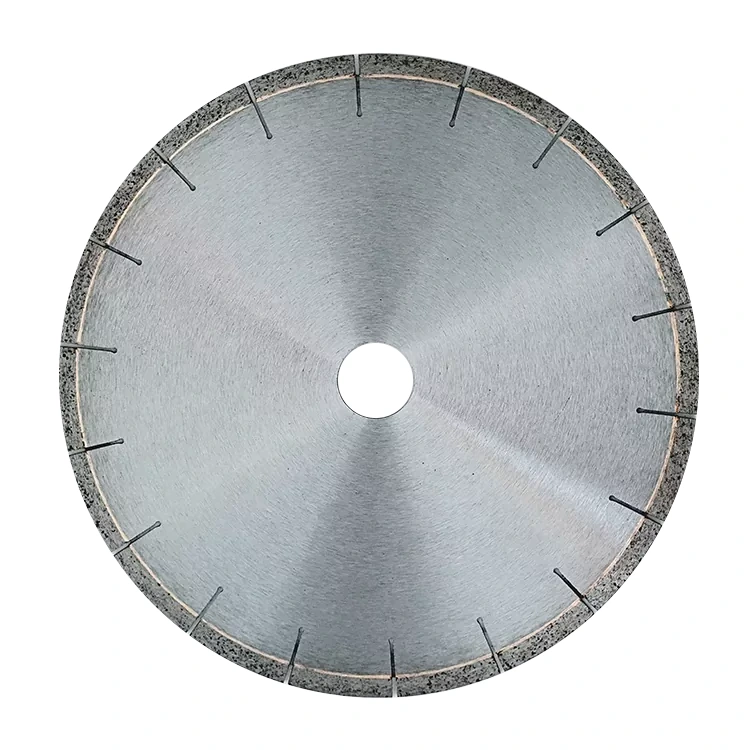
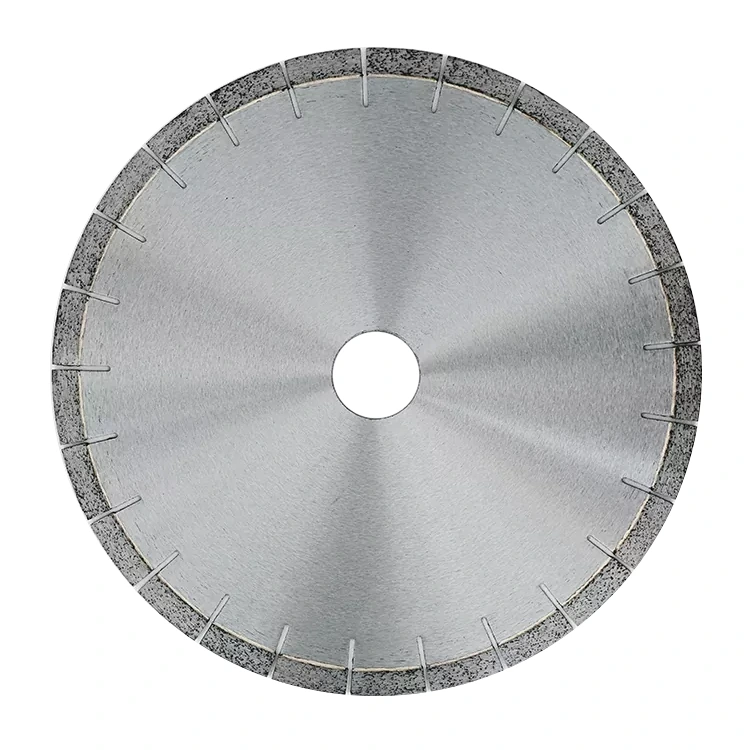
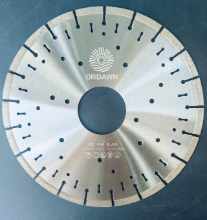
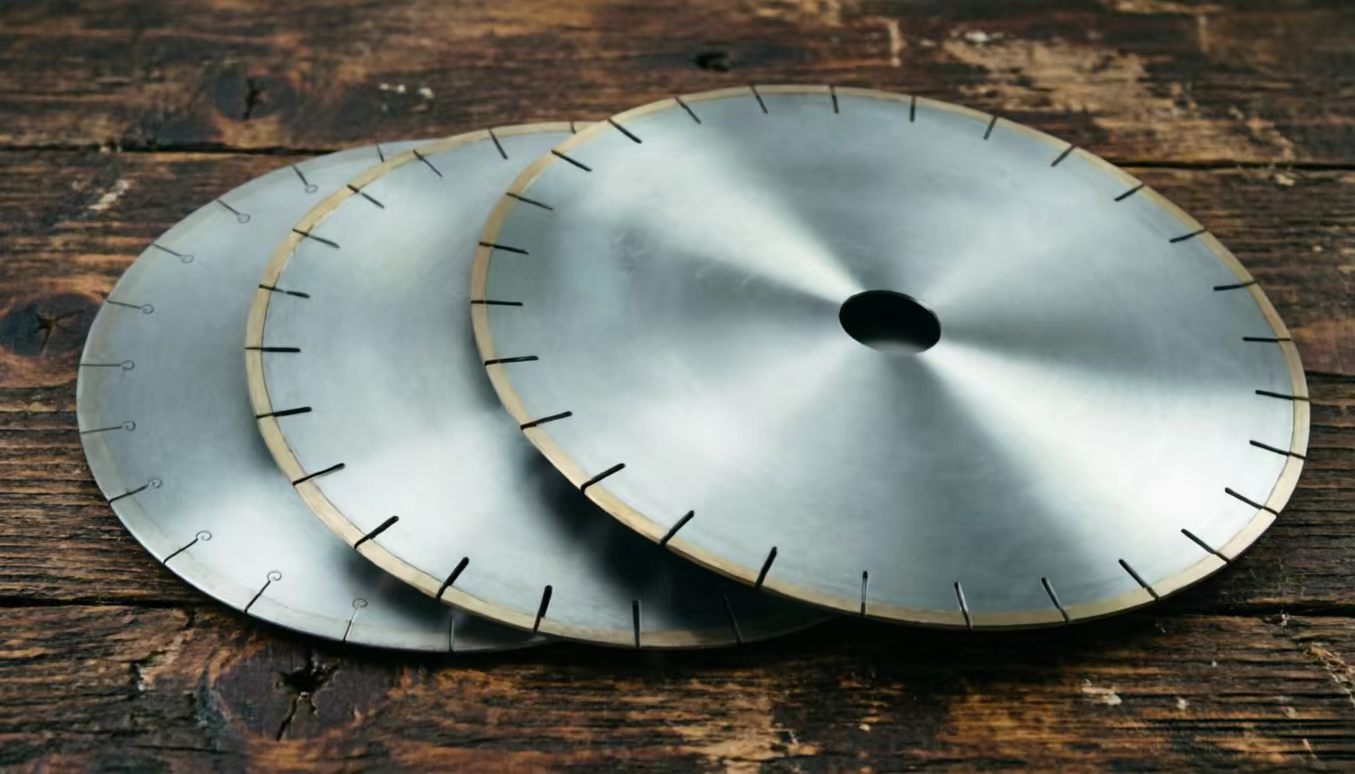
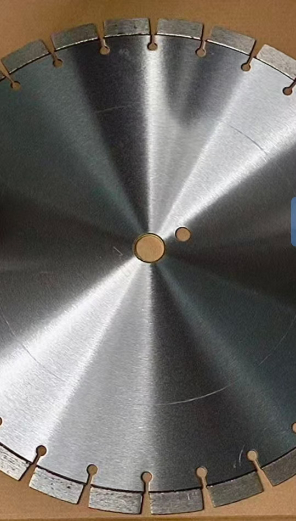
Every term in this glossary names a physical feature you can point at: the segments around the rim, the gullets between them, the core behind them, and the arbor at the centre. Photo: ORIDAWN production facility.
Why terminology decides the outcome of a purchase order
A diamond saw blade is one of the few industrial consumables where the same nominal size can be sold at two entirely different performance levels and both be described honestly. A 350 mm blade for cured concrete and a 350 mm blade for green concrete can share the same diameter, the same arbor and the same segment count, then behave nothing alike on site. The difference is entirely in the specification vocabulary — bond grade, diamond mesh, segment height, welding method.
The commercial consequence is not abstract. When a specification is ambiguous, three things happen in sequence:
· Quotations stop being comparable. Two suppliers quote the same blade at 30% apart. Neither is lying; they have interpreted “standard bond” differently. You cannot tell which is the better buy because you are not comparing the same product.
· Claims become unwinnable. If a blade performs badly and the specification never stated the material it was designed for, there is no contractual basis for a claim. The factory will point at the ambiguity, and the factory will be right.
· Customs and compliance risk appears late. Classification and duty exposure depend on how the blade is constructed — segment attached by welding versus diamonds applied directly to the core, for example. According to the published scope of the US antidumping and countervailing duty orders on diamond sawblades from China, those two constructions are treated differently. Discovering this at the port is expensive.
So this is not pedantry. Vocabulary is the mechanism by which you buy the blade you actually need.
Before the glossary, here is the target. A fully specified blade looks like this:
350 × 25.4 × 3.2 mm · 24 segments · 12 mm segment height · segmented rim · hard bond · 40/50 US mesh · laser welded · wet cut · 80 m/s max · EN 13236
Read it in order and it tells you almost everything: diameter, arbor, kerf, segment count, segment height, rim geometry, bond grade for the material, diamond coarseness, how the segment is attached to the core, the required coolant, the speed limit, and the safety standard it complies with. If your purchase order has all eleven elements, you and your supplier are discussing the same object.
If it has four — typically diameter, arbor, maybe segment height, and a price — you are buying a hope. Each section below explains one group of those elements.
Start with the parts you can see. Almost every quality dispute that is not about performance is about these six words being used loosely.
|
Term |
Chinese equivalent |
What it means |
Why it matters commercially |
|
1. Blade diameter (OD) |
外径 |
The outside diameter of the finished blade including the segments, in millimetres. |
Determines maximum cutting depth — roughly one third of the diameter in practice. Also decides which machine the blade physically fits. |
|
2. Arbor / bore |
内孔 / 中心孔 |
The central mounting hole. 25.4 mm (1″) and 22.23 mm (7/8″) dominate; 20 mm and 60 mm appear on European and bridge-saw equipment. |
A bore mismatch makes the blade unusable and is not fixable on site. Always state arbor in the RFQ, never assume the standard. |
|
3. Core / steel body / blank |
基体 / 钢基体 |
The flat circular steel plate that carries the segments. Usually a heat-treated alloy steel. |
Core quality governs how the blade tracks in the cut and whether it wobbles at speed. It is also a separately classifiable and separately dutiable article in its own right. |
|
4. Segment |
刀头 / 金刚石节块 |
The sintered block of diamond and metal powder welded to the rim. This is the part that cuts. |
Segments drive most of the cost. Segment count and height are the two levers a supplier can quietly reduce to hit a target price. |
|
5. Gullet / slot |
排屑槽 / 水槽 |
The gaps cut into the core between segments. |
Gullets clear slurry and let coolant reach the cutting edge. Undersized gullets cause overheating and glazing — a defect that looks like a bad bond but is a bad core design. |
|
6. Segment height (diamond depth) |
刀头高度 / 金刚石层厚度 |
How far the segment projects above the core rim — typically 8–12 mm for general use, up to 15 mm or more for heavy cutting. |
This is the blade’s usable life in physical form. Two blades at the same price with 8 mm and 12 mm segments are not the same value; compare cost per millimetre of cutting, not cost per blade. |
Ask your supplier for the segment height and segment count on any quotation. A supplier who answers precisely is quoting a real product. A supplier who answers vaguely is quoting a price and will fill the specification later.
This is where blades that look identical stop performing identically. Bond specification is the least visible and most consequential part of a quotation.
|
Term |
Chinese equivalent |
What it means |
Why it matters commercially |
|
7. Diamond grit / synthetic diamond |
金刚石颗粒 / 人造金刚石 |
The abrasive crystals held in the segment. Industrial diamond for saw blades is synthetic. |
Diamond grade and coating are a major hidden cost difference between a premium and an economy segment. |
|
8. Mesh size |
目数 / 粒度 |
The sieve size of the diamond particles, expressed in US mesh. Coarse (30/40, 40/50) cuts fast with a rougher finish; fine (100/120 and above) cuts slowly with a cleaner edge. |
Mesh size is also a compliance variable: under the published US order scope, blades and segments whose diamonds predominantly exceed 240 mesh fall outside the scope. |
|
9. Diamond concentration |
浓度 |
How much diamond by volume sits in the segment matrix. Higher concentration lasts longer but cuts more slowly. |
Concentration is rarely disclosed. It is the second most common way a low quotation is made low. |
|
10. Bond / matrix |
结合剂 / 胎体 |
The metal powder mixture that holds the diamond in place. It wears away in use, which is intentional — that wear is what exposes fresh diamond. |
Bond composition determines how the blade behaves across different material hardnesses. It is the core of any technical specification. |
|
11. Bond grade — soft, medium, hard |
胎体硬度(软/中/硬) |
How fast the matrix wears. A soft bond wears quickly and is used on hard, dense material. A hard bond wears slowly and is used on abrasive material. |
The most frequently inverted term in the whole industry. Selling a hard bond for cured concrete produces a blade that glazes and stops cutting; selling a soft bond for green concrete produces a blade that disappears. Both look like manufacturing defects and neither is. |
|
12. Metal bond / resin bond / electroplated |
金属结合剂 / 树脂结合剂 / 电镀 |
Three ways diamond is held. Sintered metal bond is standard for construction saw blades; resin and electroplated construction attach diamond directly to the core without a segment. |
This distinction is not academic. Under the published US order scope, blades with diamonds attached by resin or electroplated bond, and which therefore contain no diamond segment, are excluded from the scope. |
|
13. Pre-alloyed powder vs cobalt |
预合金粉 / 钴粉 |
Whether the matrix uses a pre-alloyed powder or elemental cobalt as its base. |
Pre-alloyed powder gives more consistent sintering and is generally the more advanced choice; cobalt is traditional and cost-sensitive. Both are legitimate — the problem is being charged for one and shipped the other. |
Remember it this way: the bond describes the blade, not the material. A soft bond is for hard material. A hard bond is for soft, abrasive material. Suppliers who quote “a hard bond for your hard material” have the logic backwards, and the resulting blade will not cut.
How the segment is attached to the core is both the main safety variable and the main cost variable. It is also the first thing an experienced buyer checks.
Segment-to-core attachment is checked before welding and again after. A blade that passes dimensional inspection but fails weld strength inspection is still a reject.
|
Term |
Chinese equivalent |
What it means |
Why it matters commercially |
|
14. Sintering / hot pressing |
烧结 / 热压 |
Heating diamond and metal powder under pressure until the matrix bonds into a solid segment. |
Controls segment density and diamond retention. Under-sintered segments are porous and fail early. |
|
15. Cold pressing |
冷压 |
Compacting the powder mix into a “green” segment shape before sintering. |
A preparation step, not a finished product. Be cautious of suppliers who advertise “cold pressed” segments as a finished specification. |
|
16. Laser welding |
激光焊接 |
The segment is fused to the core by laser, creating a metallurgical bond through the full contact area. |
The stronger of the two mainstream methods and the usual requirement for dry cutting and high-speed machines. Where a blade may be used dry, this is the specification that matters for safety. |
|
17. High-frequency welding / silver brazing |
高频焊接 / 银钎焊 |
The segment is joined to the core with a silver-based filler alloy using induction heating. |
Commercially important and entirely legitimate for wet cutting of stone and tile. It is not equivalent to laser welding — the two are not interchangeable specifications, and price differences between them are real rather than arbitrary. |
|
18. Weld strength / segment retention |
焊接强度 / 刀头保持力 |
The force the segment-to-core joint withstands before failing. |
The primary safety parameter of the whole product. A detached segment at operating speed is the most dangerous failure mode in the category, which is why the EN 13236 marking regime exists. |
|
19. Tensioning / flattening |
张力校平 |
Controlled mechanical treatment of the core so it stays flat and true at operating speed. |
An untensioned core runs out of true, cuts a curved line and loads the machine spindle. Cheap blades are often cheap here, and the symptom appears only after the blade is hot. |
Rim geometry is the most visible specification and the easiest to specify correctly — provided you name it precisely rather than describing it.
|
Term |
Chinese equivalent |
What it means |
Why it matters commercially |
|
20. Continuous rim |
连续边 / 连续齿 |
A solid, unbroken diamond edge with no gullets between segments. |
Produces the cleanest cut with minimal chipping. The correct choice for tile, porcelain and fine stone finishing work — and the wrong one for fast rough cutting. |
|
21. Turbo rim |
涡轮 / 波纹齿 |
A rim with angled or wavy relief that improves cooling and debris clearance while keeping a relatively fine edge. |
The general-purpose compromise. Frequently specified for granite and hard stone where both speed and finish matter. |
|
22. Segmented rim |
分段齿 / 分齿 |
Discrete segments separated by deep gullets. |
Fastest cutting and best cooling, at the cost of a rougher edge. The standard geometry for concrete, asphalt and demolition work. |
|
23. Maximum operating speed (m/s) and max RPM |
最高线速度 / 最高转速 |
Two expressions of the same limit. Peripheral speed in metres per second is machine-independent; rotational speed in rpm is what the operator must not exceed. |
Both appear in the EN 13236 marking requirements. A blade used above its rated speed is outside its design envelope and the liability sits with whoever mounted it. |
|
24. Wet cutting vs dry cutting |
湿切 / 干切 |
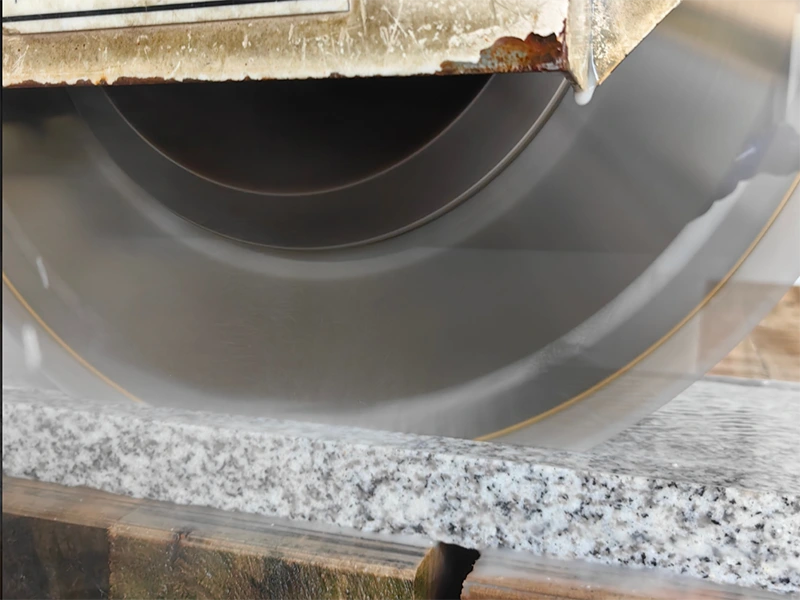
Whether water is supplied to the cut. Wet cutting controls both blade temperature and respirable crystalline silica dust. |
Determines the required welding method and segment formulation. Stating this in the RFQ is not optional — it changes what the factory should build. |
|
25. Sandwich / silent core |
三明治基体 / 消音基体 |
A core built from two steel plates with a vibration-damping layer between them. |
Reduces noise, which matters on indoor and urban sites with noise limits. A premium specification with a correspondingly higher price. |
The last five terms decide what happens after the factory gate. These are the ones most often left out of a technical discussion and most expensive to learn late.
|
Term |
Chinese equivalent |
What it means |
Why it matters commercially |
|
26. HS / HTS code |
海关编码 |
The tariff classification. Diamond saw blades are normally entered under HTSUS 8202.39.00 (circular saw blades other than with a working part of steel). |
Drives duty and the entire customs data trail. Note the subheadings: 8202.39.00.10 with diamond working parts, 8202.39.00.40 diamond sawblade cores, 8202.39.00.70 other. Retail sets may fall under heading 8206.00.00, where the highest duty rate in the set can apply to the whole set. |
|
27. MOQ |
最小起订量 |
Minimum order quantity for a given specification. |
Usually set by the number of segments per production batch rather than by warehouse stock. It drops sharply when you accept a standard segment and core combination instead of a fully custom one — a useful negotiating lever. |
|
28. OEM / private label |
贴牌 / 自有品牌 |
Producing blades marked with the buyer’s brand instead of the manufacturer’s. |
The standard route for a distributor building brand equity. Clarify early who owns the tooling for any custom core stamping. |
|
29. EN 13236 marking |
EN 13236 标识 |
The European safety standard for superabrasive products. A blade marked EN 13236 must carry nine mandatory items, plus a tenth in France. |
The marking is your due-diligence checklist. See the breakdown below — a blade that cannot show all nine items should not be on your shelf in the EU. |
|
30. AD / CVD scope |
反倾销 / 反补贴范围 |
The US maintains antidumping and countervailing duty orders covering diamond sawblades and parts thereof from China. The scope covers finished blades with diamond segments and semifinished cores and segments, subject to exclusions. |
Scope — not price — determines duty exposure, and several construction types fall outside it. Confirm classification and current deposit rates with a licensed customs broker before you order. |
According to guidance published by the Federation of European Producers of Abrasives, a blade marked EN 13236 must carry these items. Items 1 to 9 are mandatory for products marked EN 13236.
|
# |
Required marking |
What to check on the actual blade |
|
1 |
Restriction of use |
e.g. “not for grinding” or “must be used wet” |
|
2 |
Maximum operating speed (m/s) |
Compare against your machine’s rated peripheral speed |
|
3 |
Direction of rotation |
Arrow must be legible and must match the machine |
|
4 |
Dimensions (mm) |
Diameter, bore and thickness consistent with the packing list |
|
5 |
Declaration of conformity |
EN 13236 reference present |
|
6 |
Manufacturer, supplier, importer or registered trade mark |
Must identify a traceable legal entity |
|
7 |
Supplier name or registered trade mark |
Producer, importer or distributor |
|
8 |
Maximum rotational frequency (rpm) |
The figure the operator actually works to |
|
9 |
Traceability code |
Links the blade to a production batch — essential for any claim |
|
10 |
Safety pictograms (PPE) |
Mandatory in France |
Item 9 — the traceability code — is the one buyers most often ignore and the one that decides whether a quality claim is possible at all. Photograph the marking on arrival and file it against the batch. Without a traceability code, a performance complaint cannot be tied to a production run, and the conversation ends there.
Scope questions are best answered by a customs broker, but the published exclusions are specific and worth knowing when you specify a product. According to the scope text of the orders, the following categories are excluded:
· Blades with diamonds attached directly to the core by resin or electroplated bond, and which therefore contain no diamond segment;
· Blades or cores with a thickness below 0.025 inch or above 1.1 inch;
· Circular steel plates with a cutting edge of non-diamond material;
· Cores with a Rockwell C hardness below 25;
· Blades or segments whose diamonds predominantly have a mesh size number greater than 240, such as 250 or 260.
Two things follow. First, a resin-bond or electroplated blade is a genuinely different product, not a cheaper version of the same one — the scope treatment reflects that. Second, if you are comparing quotations that appear to differ by far more than the specification explains, the difference is often a construction difference sitting on a scope boundary, and it belongs in the conversation before the order, not after.
These are the recurring mismatches between what a Chinese-speaking factory means and what an English-speaking buyer hears. They are worth memorising.
|
What is often written |
What it actually means |
Consequence of the mismatch |
|
“Knife head” |
Segment (刀头) |
Literal translation. The buyer may not recognise that this is the cutting element and therefore the main cost driver. |
|
“Density” of diamond |
Concentration (浓度) |
Concentration is a volume ratio, not a material density. Misreading it obscures the second-largest cost variable in the segment. |
|
“Burning” or “fire” process |
Sintering (烧结) |
The buyer cannot assess process quality, so cannot judge why one segment differs from another. |
|
“Water slot” |
Gullet (排屑槽) |
Gullets clear debris as well as coolant. Calling them water slots hides the debris-clearance function and invites undersizing. |
|
“Matrix” used alone |
Bond / matrix (胎体) |
Ambiguous between the metal matrix and the segment as a whole. Always ask for bond grade explicitly. |
|
“Hard blade for hard material” |
Inverted logic — see term 11 |
Produces a glazed blade that stops cutting and gets blamed on the factory. |
|
“Silver welding” |
High-frequency welding / brazing (高频焊接) |
Can be mistaken for laser welding. The two are not interchangeable and carry different safety profiles. |
|
“Standard export packing” |
Unspecified |
Means nothing. Specify carton, quantity per carton, blade protection and palletisation in the PO. |
Send this instead of “please quote your best price for 350 mm blades”. It takes two minutes and removes most of the ambiguity that makes quotations incomparable.
Subject: RFQ — diamond saw blade, [application], [qty]
1. Application / material to cut : ........... (e.g. cured concrete, reinforced)
2. Machine type : ........... (handheld / walk-behind / bridge saw / wall saw)
3. Blade diameter (mm) : ...........
4. Arbor / bore (mm) : ...........
5. Wet or dry cutting : ...........
6. Segment height requested (mm) : ...........
7. Rim geometry : continuous / turbo / segmented
8. Bond grade for this material : please recommend, state soft / medium / hard
9. Welding method required : laser welded / high-frequency welded
10. Speed requirement (m/s) : ...........
11. Marking / compliance required : EN 13236 / other
12. Destination port : ........... (Incoterm: FOB / CIF / DDP)
13. Target annual volume : ...........
14. OEM or private label : yes / no
Please confirm in your quotation: segment count, segment height,
diamond mesh and concentration, bond grade, welding method,
traceability code on the blade, and HS code used for export.
The last line is the important one. A supplier who can answer all seven items is a supplier with a real specification, and you now have a basis for comparing quotations and for making a claim if the product underperforms.
If you communicate with a factory in Chinese, or through an intermediary, the Chinese equivalents in the tables above let you confirm the specification directly rather than through translation. Model names and feature names are often translated loosely by trading intermediaries — two intermediaries describing 高频焊接 and 激光焊接 both as “welded blade” is a real and costly failure mode. Our own diamond saw blade range is specified with these terms on every quotation for exactly this reason.
1.What is the difference between a diamond saw blade segment and the core?
The core (also called the steel body or blank) is the flat circular steel plate that carries the blade. The segment — known as 刀头 in Chinese — is the sintered block of diamond and metal powder welded to the rim that performs the actual cutting. The core only provides rigidity and transmits torque; all cutting happens at the segment.
2.What does a soft bond and a hard bond actually mean?
Bond grade describes how quickly the metal matrix wears away, not how hard the blade feels. A soft bond wears faster and exposes fresh diamond, so it suits hard, dense materials such as cured concrete and hard granite. A hard bond wears slowly and suits abrasive materials such as green concrete, asphalt and sandstone. Selecting the wrong grade is the single most common cause of a blade that will not cut or that wears out early.
3.What does EN 13236 marking mean on a diamond blade?
EN 13236 is the European safety standard for superabrasive products. A blade marked EN 13236 must carry nine mandatory items: restriction of use, maximum operating speed in m/s, direction of rotation, dimensions in mm, declaration of conformity, manufacturer or supplier identity, supplier name or registered trade mark, maximum rotational frequency in rpm, and a traceability code. A tenth item — safety pictograms for personal protective equipment — is mandatory in France.
4.Which HS code applies to diamond saw blades?
Diamond saw blades are normally classified under HTSUS 8202.39.00, which covers circular saw blades other than those with a working part of steel. The subheading breaks out 8202.39.00.10 with diamond working parts, 8202.39.00.40 diamond sawblade cores, and 8202.39.00.70 other. When a blade is packed with other tools as a retail set, heading 8206.00.00 can apply. Classification is provided for convenience only — the written scope description governs.
5.Are all diamond saw blades from China subject to US antidumping duties?
No. The US order covers finished circular sawblades with diamond segments plus semifinished parts such as cores and segments, but it excludes several categories, including blades with diamonds attached directly to the core by resin or electroplated bond rather than as a segment; blades with a thickness below 0.025 inch or above 1.1 inch; cores with Rockwell C hardness below 25; and blades or segments whose diamonds predominantly have a mesh size number greater than 240, such as 250 or 260. Importers should confirm scope and current deposit rates with a licensed customs broker before ordering.
6.What does MOQ mean in a diamond blade quotation, and why is it different from a stock quantity?
MOQ stands for minimum order quantity — the smallest volume a factory will accept for a given specification. It differs from a stock quantity because a custom blade requires the segment mix, core stamping, welding setup and packaging to be run for that order alone. MOQ therefore usually tracks the number of segments per production batch rather than warehouse availability, which is why it drops sharply when you accept a standard segment and core combination.