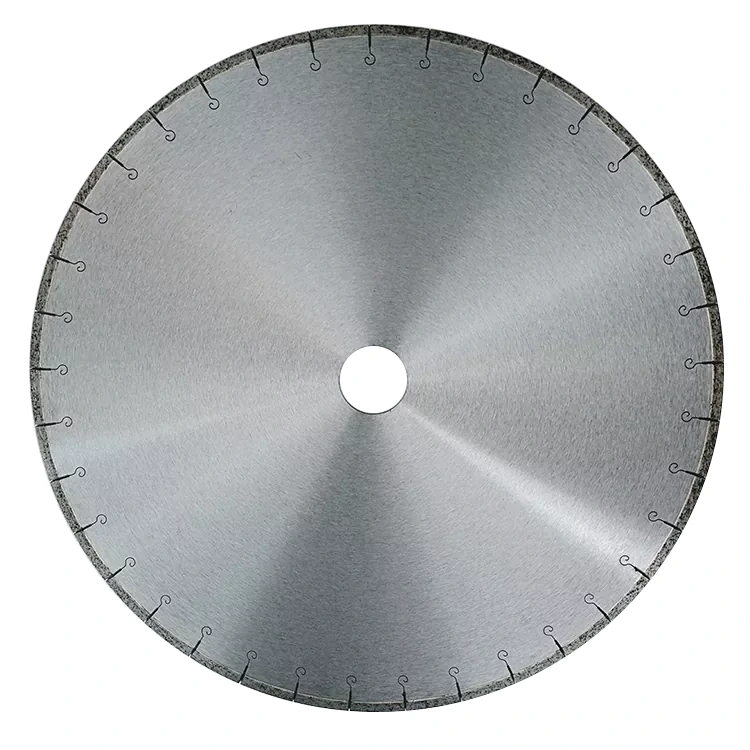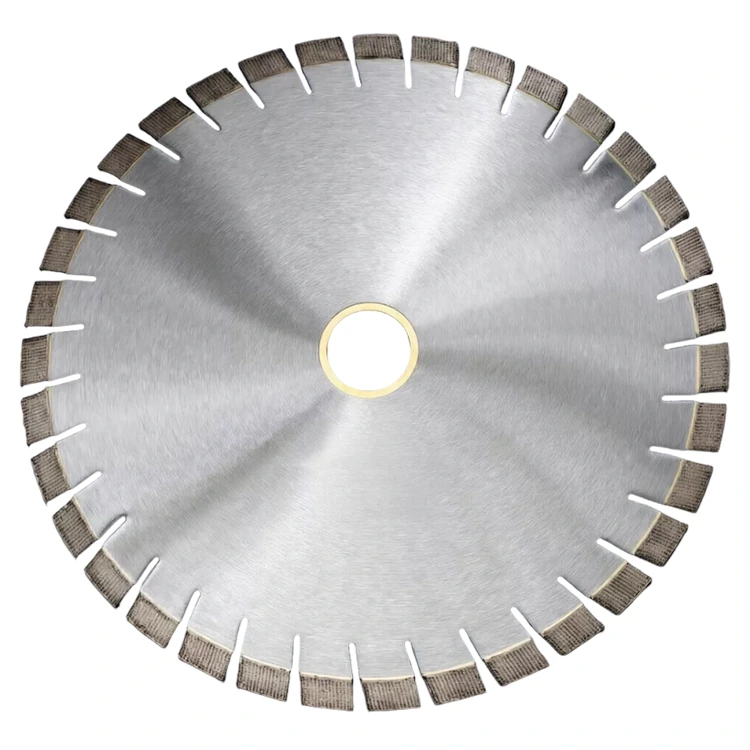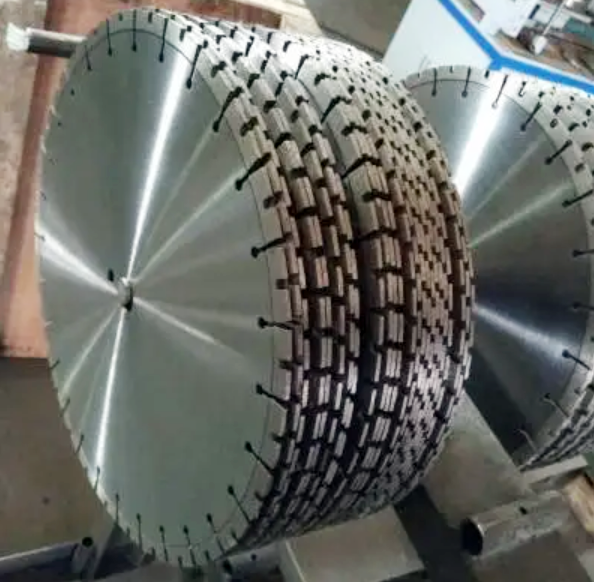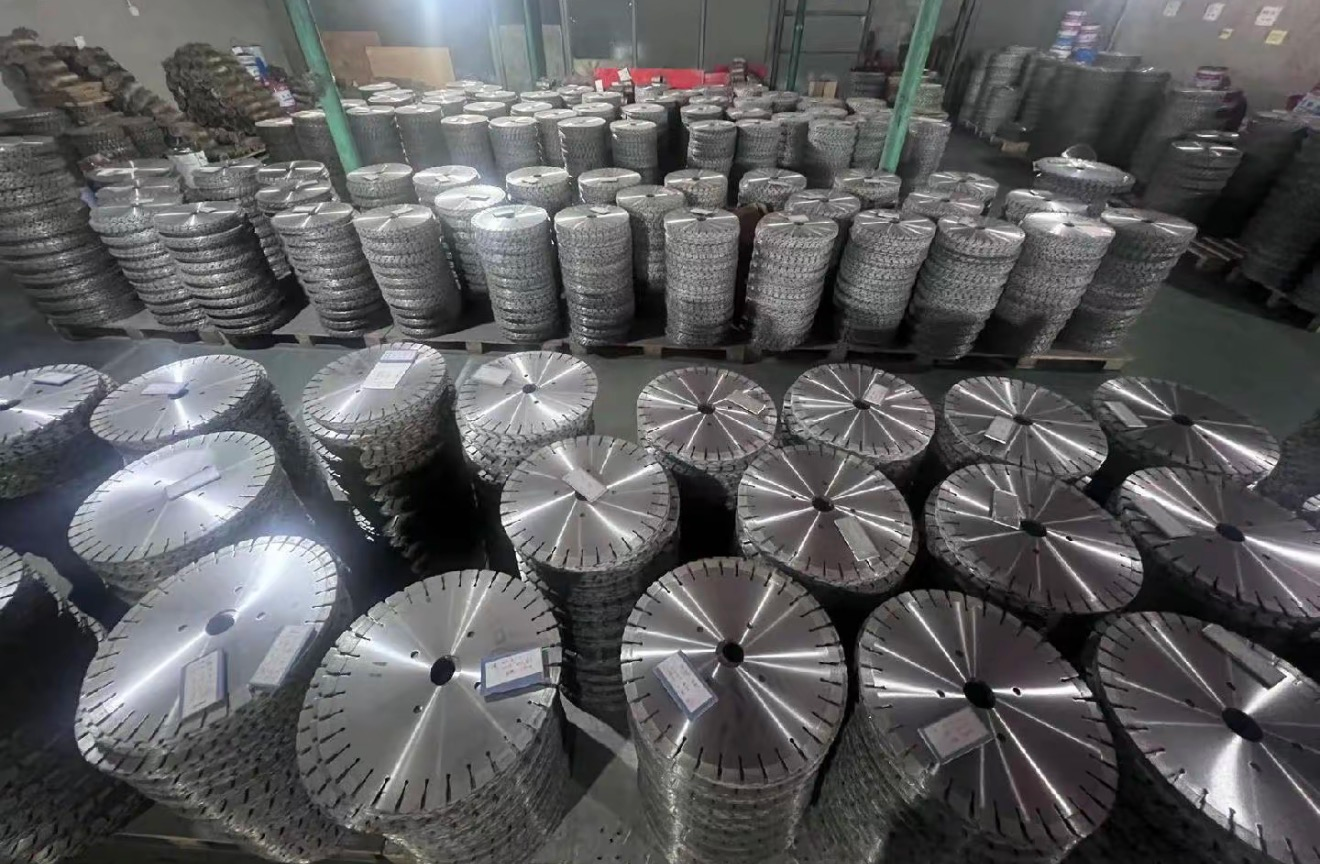

Quick answer: An 1800 mm (71-inch) diamond saw blade is a large-diameter circular blade engineered for cutting massive, ultra-hard materials in industrial settings. The most common scenarios are granite and marble block cutting in quarries and processing plants, large concrete and reinforced-concrete cutting in construction and demolition, bridge and road infrastructure projects, and hard-rock mining. Its size lets it reach a cutting depth of roughly 700–800 mm in a single pass, making it the workhorse for block and slab production.
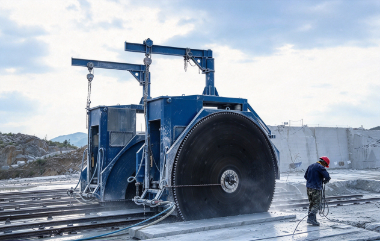
The dominant application for an 1800 mm diamond blade is cutting natural stone blocks — especially granite, marble and sandstone — in quarries and slab factories. On a single-blade or double-blade block cutter, the large diameter delivers the deep cut needed to slice a raw block into slabs without multiple setups.
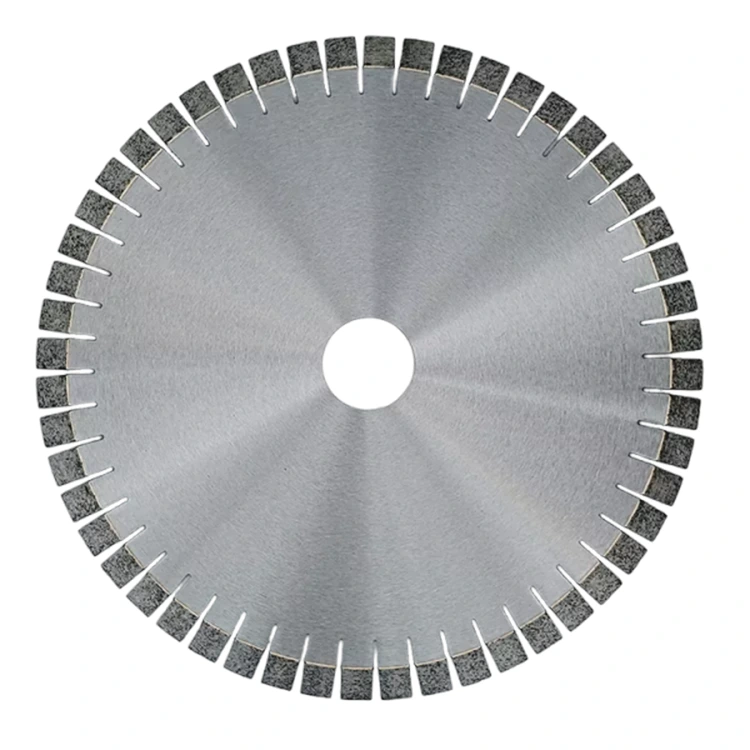
· Granite block cutting: Hard, abrasive granite demands a high-quality diamond segment with the right bond. An 1800 mm blade is the standard size for mid-to-large granite block cutters.
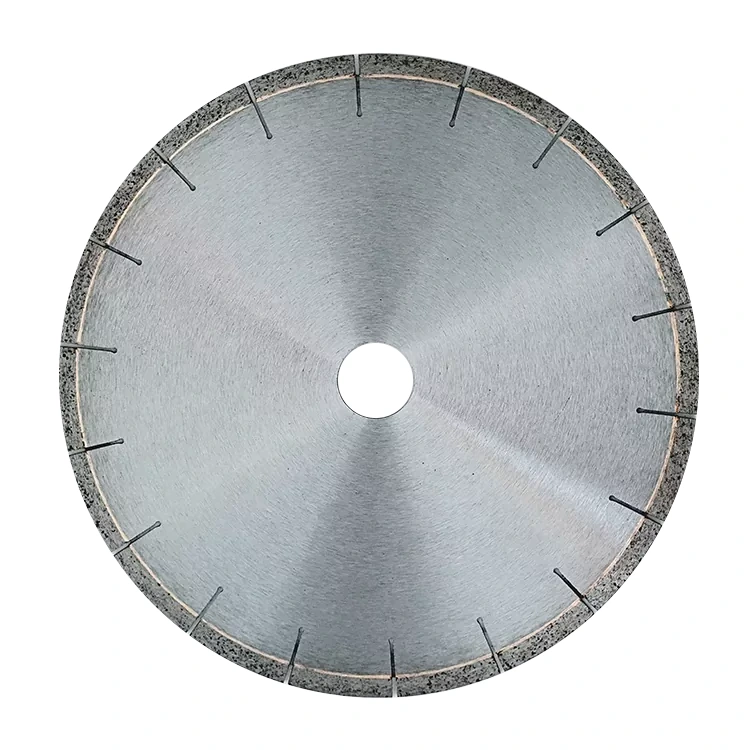
· Marble and travertine: Softer than granite, marble is cut with a softer bond for faster, cleaner slices and less chipping.
· Sandstone and limestone: Highly abrasive stones need a tougher, more wear-resistant segment formulation.
In a typical slab plant, an 1800 mm blade converts raw blocks into the uniform slabs used for countertops, tiles and cladding. This is where throughput matters most, and blade life directly affects cost per square meter.
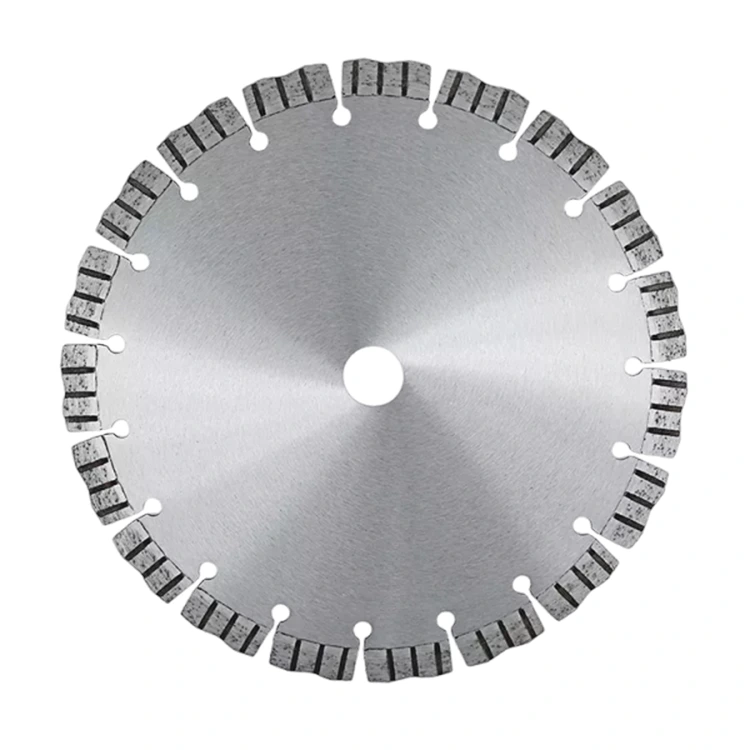
For construction and demolition, an 1800 mm blade mounted on a wall saw or track saw handles deep concrete cuts that smaller blades cannot reach — for example cutting openings in thick foundation walls, beams and pillars. With a turbo or sandwich segment and a concrete-tuned bond, it cuts through reinforced concrete, though heavily reinforced sections may still call for a wire saw.
Large-diameter blades are used in infrastructure maintenance and expansion:
· Bridge decks and piers: controlled cutting and partial demolition during repair.
· Road and runway: deep joint cutting and removal of damaged concrete sections.
· Tunnel segments: sizing precast concrete elements.
In mining, 1800 mm blades cut hard rock and ore-bearing stone where wire saws are impractical, particularly in smaller-scale or selective-cut operations. They are valued for a straight, low-waste cut in abrasive conditions.
The same diameter performs very differently depending on three factors:
· Hard stone (granite): softer bond so diamonds expose continuously.
· Soft / abrasive stone (sandstone, marble): harder bond for longer life.
· Concrete: medium-hard bond with turbo or sandwich segments for steel reinforcement.
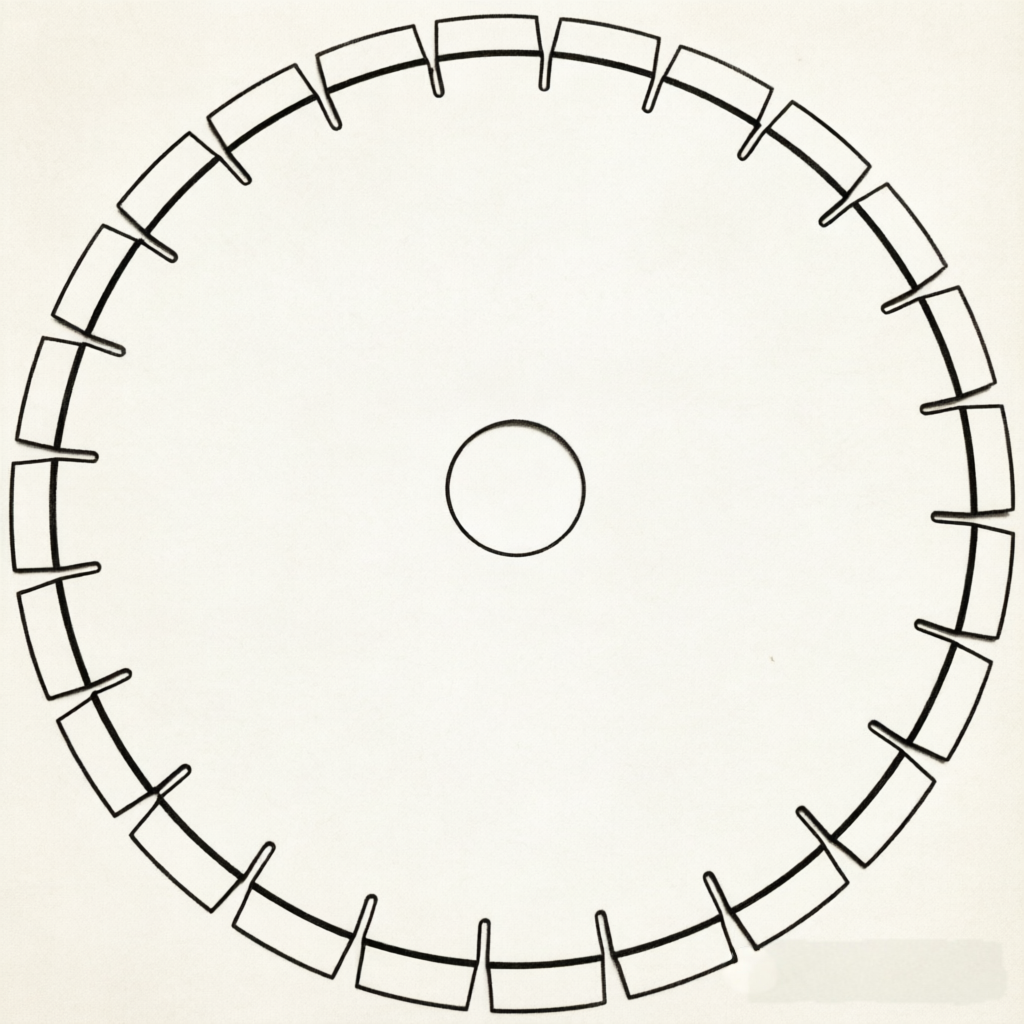
Higher segments (e.g. 40 mm) mean more dressings and lower cost per cut. Sandwich and turbo segments improve cooling and reduce vibration on tough jobs.
Confirm the arbor size (common: 100 mm / 120 mm), spindle speed and power of your block cutter, bridge saw or wall saw before ordering.
|
Parameter |
Typical value |
Note |
|
Diameter |
1800 mm (71 in) |
Large-diameter class |
|
Arbor / bore |
100 mm / 120 mm |
Other sizes on request |
|
Segment height |
40 mm (common) |
Higher = longer life |
|
Segment count |
~108–120 |
Varies by design |
|
Cutting depth |
~700–800 mm |
Single pass |
|
Materials |
Granite, marble, concrete, sandstone |
Segment bond tuned per material |
|
Machines |
Block cutter, bridge saw, wall saw |
Match RPM and power |
Specifications vary by product line. Confirm exact parameters with the Oridawn technical team before purchase.
What is the maximum cutting depth of an 1800mm diamond saw blade?
In a single pass an 1800mm blade reaches roughly 700 to 800 mm (about 28 to 31 inches) of cutting depth, depending on the machine spindle, segment height and feed rate.
Can an 1800mm diamond blade cut reinforced concrete?
Yes. With turbo or sandwich segments and a bond formula tuned for reinforced concrete, an 1800mm blade cuts deeply through concrete. Heavily reinforced sections may still need a wire saw or wall saw for clean results.
What machines use 1800mm diamond saw blades?
Single-blade and double-blade block cutting machines, large bridge saws, concrete wall saws and road saws built for deep cutting all use 1800mm blades.
Why choose an 1800mm diamond blade instead of a smaller one?
The large diameter enables deep, single-pass cuts on blocks and slabs that smaller blades cannot reach, which raises throughput and reduces the number of passes in quarries and processing plants.
Oridawn specializes in the production of diamond saw blades for granite, marble, and concrete. We also partner with manufacturers in the mining sector that strictly adhere to industry standards and produce large-diameter saw blades, offering comprehensive, one-stop solutions tailored specifically to your stone materials and equipment. Please let us know the materials you plan to process, your equipment model, and your target output—we will recommend the appropriate specifications for you.