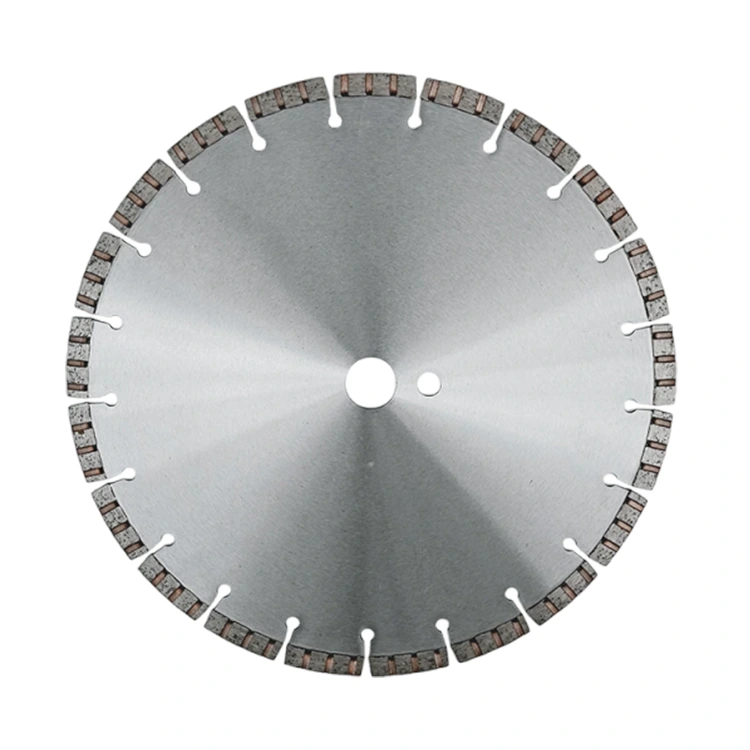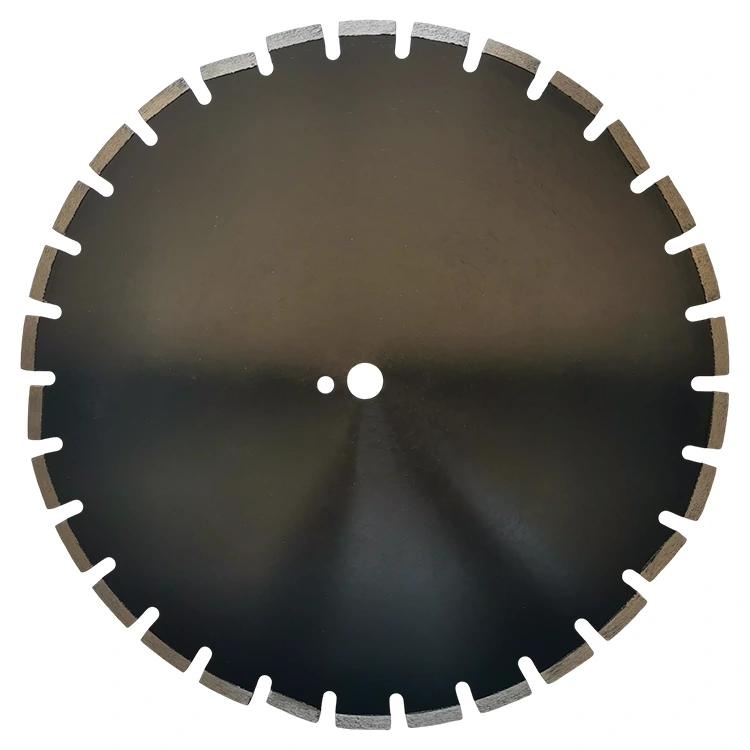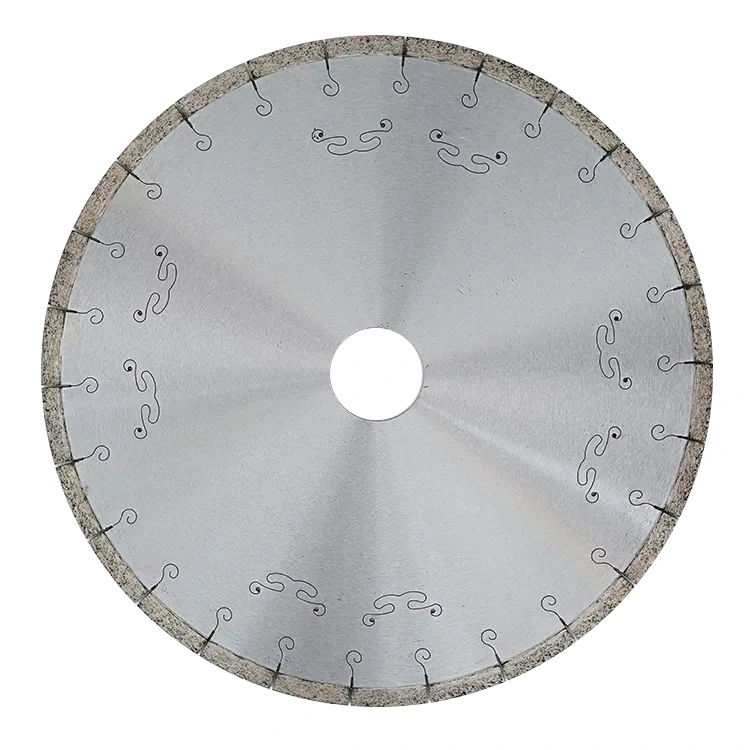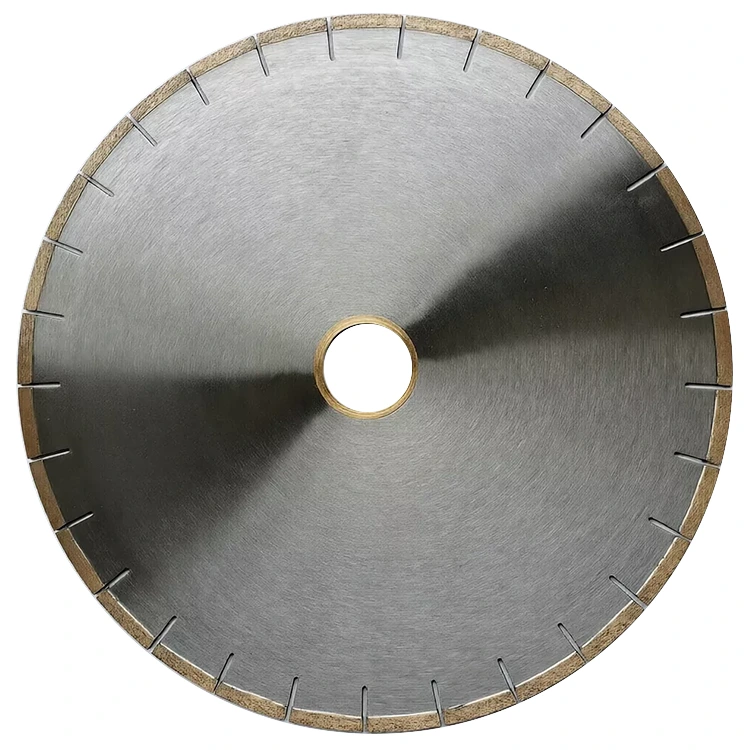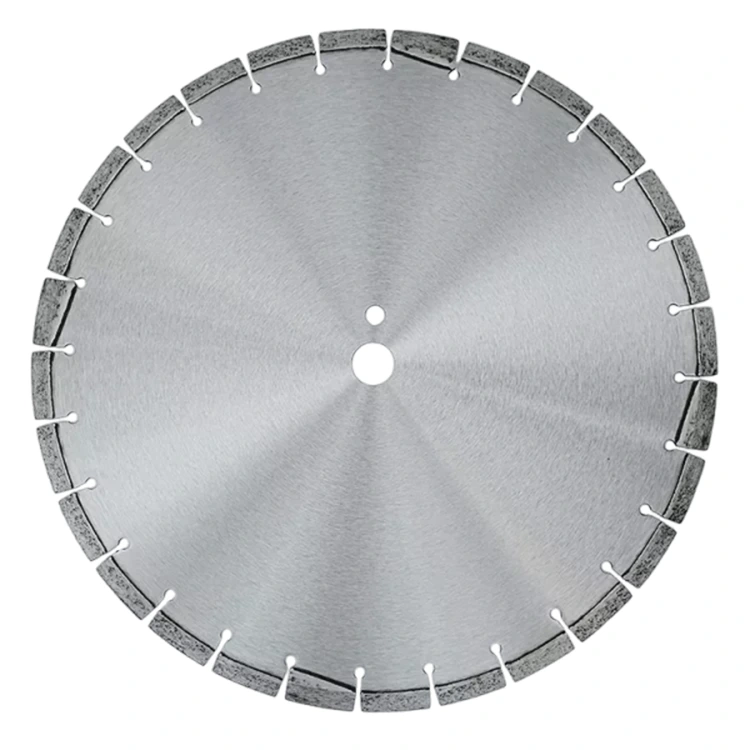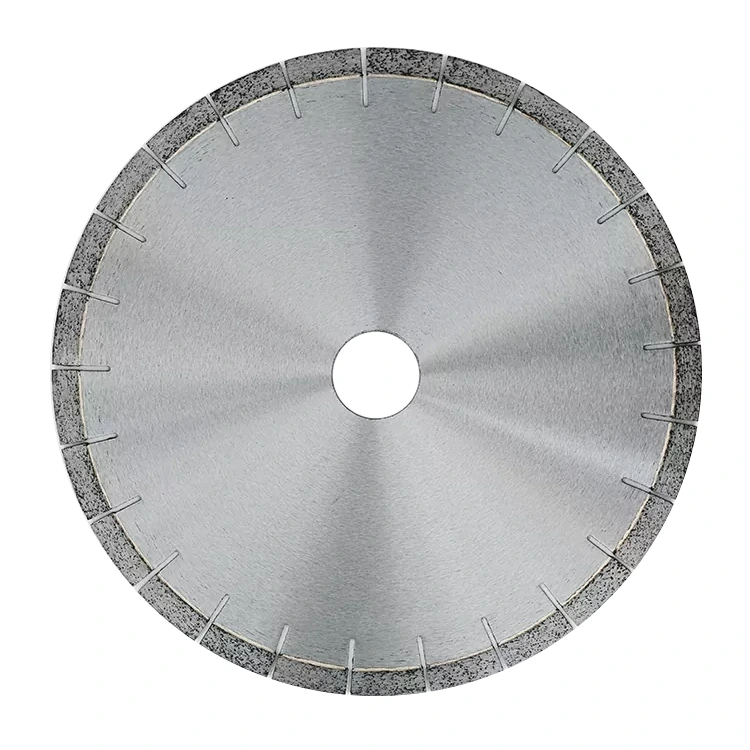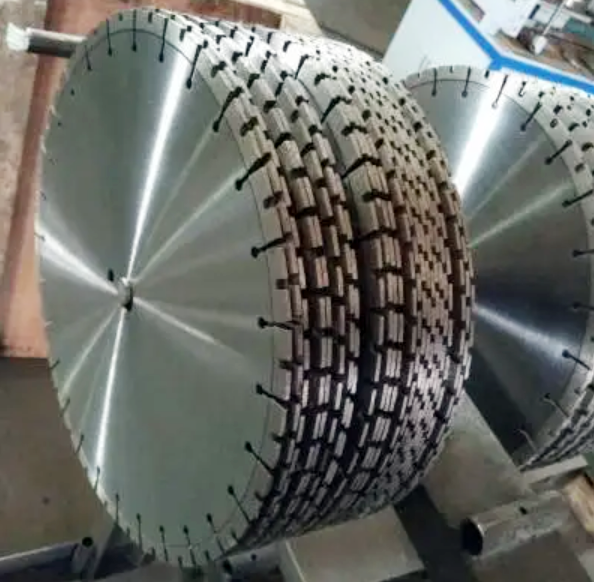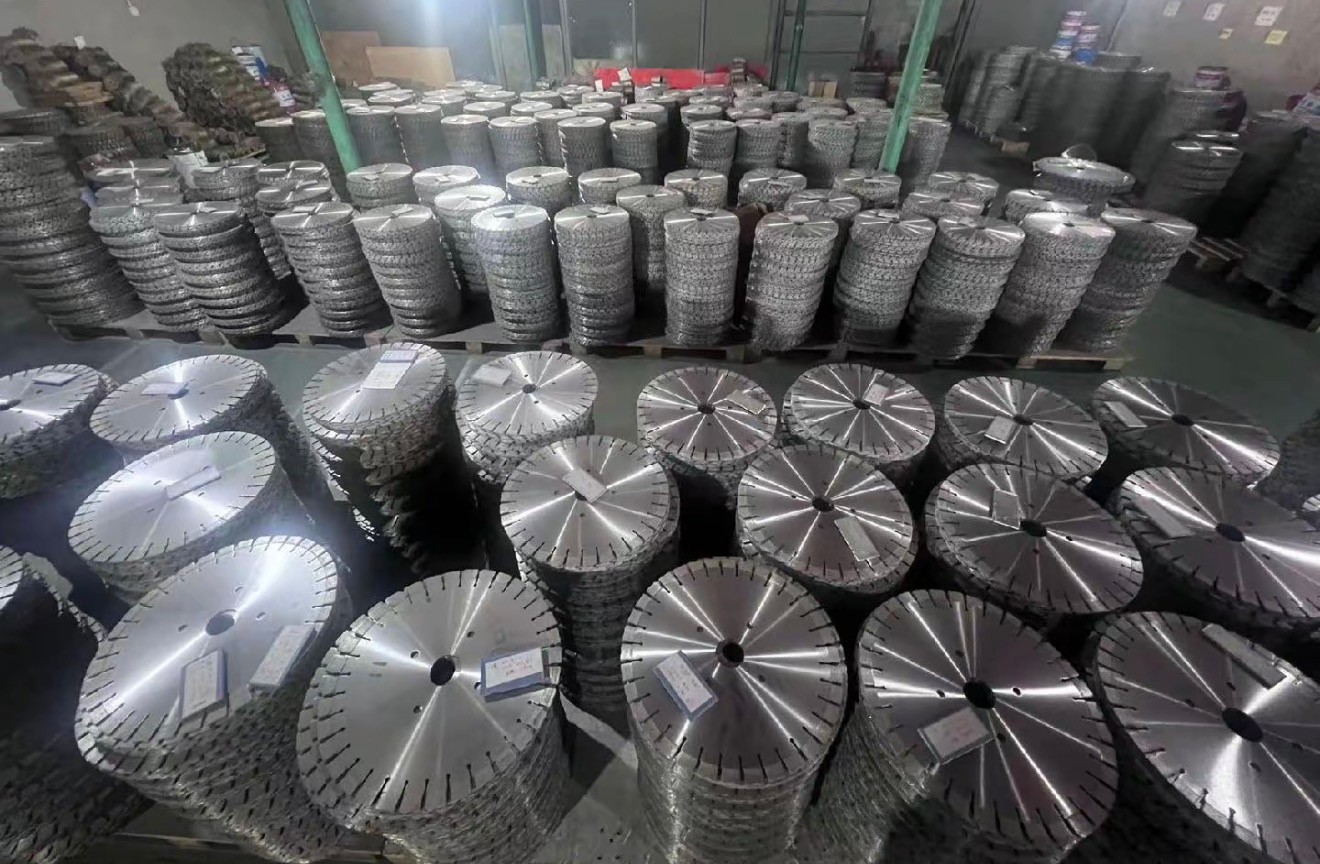

Most quotations for diamond saw blades are wrong for one reason: the inquiry did not contain enough information. Here is the complete set of machine, material, blade, compliance and commercial data a manufacturer needs — and a template you can copy into your next email.(By Steven Li, Export Director, ORIDAWN11 September 2026)
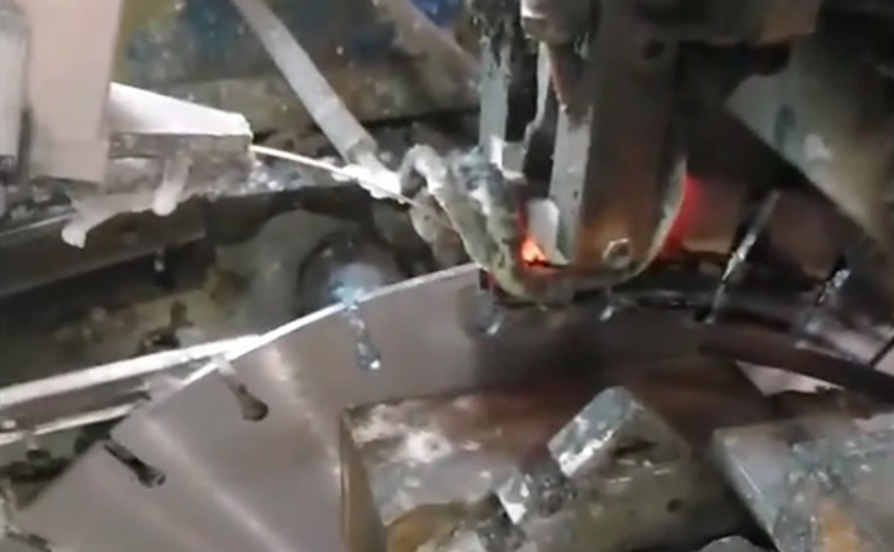
Laser welding is the joining process used for diamond blades that must survive dry cutting and high spindle speeds. The welding data behind a blade is only as good as the application data the buyer supplies.
1. Why a two-line inquiry costs you weeks
2. Block 1 — Machine and cutting setup data
4. Block 3 — Blade geometry and construction
5. Block 4 — Performance targets and acceptance criteria
6. Block 5 — Compliance and documentation
7. Block 6 — Commercial, packaging and logistics data
8. Block 7 — Market context and after-sales data
10. What a qualified supplier asks you back
11. Six common mistakes and what they cost
12. Frequently asked questions
A diamond saw blade is not a catalogue item with one answer per diameter. Two blades of identical size can be built with opposite bonds, different diamond grit and different segment heights, and behave nothing alike. The bond must match both the material being cut and the way the machine cuts it.
When an inquiry arrives without that information, a competent supplier has only two options: ask again, or guess. Guessing produces a blade that glazes on one site and sheds segments on another — and the buyer concludes the supplier is the problem, when the specification was never defined.
In practice, a complete inquiry is quoted in one to three working days. An incomplete one usually costs one to two weeks of question-and-answer cycles before the first quote is even issued, and every round trip is a chance for a detail to be lost. The seven blocks below are the data a manufacturer needs to turn an inquiry into a specification.
The machine sets hard limits on what a blade may be. The single most important figure is the machine's maximum spindle speed in rpm, because a blade is only safe below the speed marked on it, and the manufacturer's declaration of maximum operating speed is expressed in metres per second.
How maximum operating speed converts to rpmrpm = (v × 60,000) ÷ (π × D) where v = speed in m/s, D = blade diameter in mmA blade declared at 100 m/s is therefore limited to roughly 6,366 rpm at 300 mm, 5,457 rpm at 350 mm, 4,775 rpm at 400 mm and 3,820 rpm at 500 mm. Give the supplier your machine's no-load rpm and the required diameter, and the speed question resolves itself immediately.
|
Machine type |
Typical blade Ø |
Typical bore |
What the supplier needs from you |
|
Hand-held petrol / electric cutter |
300 – 400 mm |
20.00 / 22.23 / 25.40 mm |
Max spindle rpm, wet or dry operation, water tank or hose feed |
|
Angle grinder |
100 – 230 mm |
22.23 mm, M14 spindle |
Max rpm (typically 6,500 – 11,000), dry cutting, kerf limit |
|
Masonry / table saw |
250 – 500 mm |
25.40 mm |
Fixed rpm, water flow rate, table feed method |
|
Walk-behind floor saw |
350 – 800 mm |
25.40 mm |
Max rpm, cutting depth, water flow, engine power |
|
Wall saw / ring saw |
600 – 1,200 mm / 350 – 500 mm |
25.40 / 60 mm |
Track-mounted speed, depth per pass, wet only |
|
Bridge saw (stone) |
300 – 600 mm |
50.80 / 60 mm |
Feed rate, water volume, slab thickness, finish requirement |
Alongside the table, four more details change the specification: whether the machine is guarded and what the flange diameter is (it affects core stiffness and lateral stability), the direction of rotation required, whether the cut is plunge or through-cut, and the operator's typical feed style — forcing the blade or letting it cut at its own pace.
Material data determines the bond hardness and the diamond grade. This is the block buyers most often compress into a single word such as "concrete", which is the equivalent of ordering a tyre for "a car".
|
Parameter |
Why it changes the blade |
What to write in the inquiry |
|
Compressive strength |
Harder, denser concrete requires a softer bond so worn diamond keeps exposing |
C20/25 (≈ 2,900–3,600 psi) up to C50/60 (≈ 7,250–8,700 psi), or the local grade name |
|
Aggregate type |
Abrasive aggregate wears the bond away; hard aggregate polishes the diamond |
Flint / siliceous river gravel, limestone, granite, basalt — and the largest stone size |
|
Reinforcement |
Rebar interrupts the cut and loads segments in a different way |
Bar diameter (e.g. ⌀10–32 mm), spacing, single or double mat, mesh |
|
Cure state |
Green concrete behaves almost like an abrasive, cured concrete like a hard material |
Green (under 24 h), partially cured, or fully cured at 28 days |
|
Stone hardness |
Sets the bond family and diamond concentration |
Marble (Mohs 3–4), granite (Mohs 6–7), engineered quartz (Mohs ~7) |
|
Water / slurry |
Wet cutting cools the segment and flushes swarf; dry cutting requires a heat-tolerant joint |
Continuous water, occasional water, or dry with dust extraction |
The bond rule worth memorising: abrasive materials wear the bond, so they need a harder bond; hard, dense materials wear the diamond, so they need a softer bond that keeps exposing fresh grit. If a supplier does not ask about aggregate type and cure state, they are choosing a bond family by default rather than by specification.
Once the application is known, geometry becomes a set of ordered choices. State them explicitly rather than leaving them to the supplier, because each one trades cutting speed against blade life and price.
|
Item |
Common values |
What it decides |
|
Diameter |
105, 115, 125, 180, 230, 300, 350, 400, 450, 500, 600, 800, 1,000, 1,200 mm |
Cutting depth and compatibility with the machine guard |
|
Bore |
20.00, 22.23 (7/8″), 25.40 (1″), 50.80, 60, 63.5 mm + bushing rings |
Fits the spindle without play; imperial sizes must be converted exactly |
|
Segment height |
7, 10, 12, 15, 20, 25 mm |
Total available cutting life; a taller segment is not always a better buy |
|
Segment width / kerf |
2.6, 3.2, 3.6, 4.0, 4.5, 5.0 mm |
Power demand, cutting speed and material removal per pass |
|
Core thickness |
1.6 – 5.0 mm |
Stability at depth versus weight and power requirement |
|
Rim type |
Segmented, turbo rim, continuous rim |
Best cutting speed (segmented), cleaner edge (turbo), chip-free tile and porcelain (continuous) |
|
Construction |
Laser welded / high-frequency brazed / sintered / electroplated |
Dry cutting capability and safety margin at high speed |
|
Core options |
Silent core, laser-cut gullets, hardened core, painted or polished finish |
Noise reduction, heat control, retail presentation |
If your market is price-sensitive and the application is forgiving, say so — the supplier can trim segment height or kerf and keep the performance your customers actually notice. If your customers run machines hard or cut reinforced concrete all day, say that too, because that trade must go the other way.

Segment height, width and diamond grit are visible in the finished product — but they are chosen from the application data the buyer provides, not from the blade drawing alone.
A supplier cannot be held to a performance standard that was never written down. Give target values, and agree the test method in the same message, because a blade tested on a different machine or in different concrete will produce a different number every time.
· Cutting speed — metres per minute of floor cut, or centimetres per minute of penetration, measured on a defined material.
· Blade life — linear metres cut, square metres of floor cut, or number of cuts per blade before the operator declares it finished.
· Cost per cut — the metric that actually matters commercially, and the one that makes a longer-life blade cheaper than a low-price blade.
· Edge quality — permitted chipping in millimetres for stone and tile work.
· Noise and vibration — a stated limit in dB(A) where the market or the end user requires it.
· Balance and lateral run-out — a declared grade and a maximum run-out figure for high-speed applications.
· Failure definitions — what counts as a defect: segment loss, core cracking, glazing, or undercutting of the core.
Compliance is where a purchase becomes defensible. For diamond blades sold into Europe, the reference standard is EN 13236, Safety requirements for superabrasive products. It is the documentation that sits behind the CE conformity of the cutting machine the blade is fitted to, and it is often referenced by the buyer's own customer.
Under EN 13236, nine marking elements are mandatory on the product itself: restriction of use, maximum operating speed in m/s, direction-of-rotation arrow, dimensions in millimetres, the declaration of conformity reference, the manufacturer's or registered trade mark, the supplier name, the maximum rotational frequency in rpm, and a traceability code. A tenth element — safety pictograms for personal protective equipment — is mandatory in France. The oSa mark, administered through the abrasives safety scheme and supported by FEPA, the Federation of European Producers of Abrasives, is the private-label variant of the same obligation.
One point that trips up buyers: there is no such thing as an "EN 13236 certificate" issued by a third-party body. EN 13236 is a harmonised standard under European machinery legislation, and conformity is declared by the manufacturer in a declaration of conformity supported by technical documentation — speed calculation, balance measurement, clamping dimensions and segment retention testing. Ask for the declaration plus the test records, and you have what a competent market surveillance authority would ask for.
Worth noting for planning: the EU Machinery Regulation (EU) 2023/1230 replaces Directive 2006/42/EC and applies on a mandatory basis from 20 January 2027, with no dual-application window. Suppliers who already maintain clean technical documentation will transition without disruption; buyers should confirm the timeline with their supplier and with their own compliance function.
|
Document |
Reference |
What it proves |
|
Declaration of conformity |
EN 13236 |
The manufacturer declares compliance with the harmonised safety standard |
|
Product marking |
EN 13236, elements 1–9 |
Speed limit, direction, dimensions, traceability on the blade itself |
|
Dimension series |
ISO 22917 |
Standardised diameters and bore sizes for interchangeability |
|
Quality management |
EN ISO 9001:2015 |
Documented production and inspection control at the factory |
|
Test records |
Overspeed / segment retention tests |
The blade has been verified above its declared working speed |
|
Chemical compliance |
REACH, as applicable |
No restricted substances in the product or packaging for the EU market |
|
Trade classification |
HS 8202.39 (HTSUS 8202.39.00) |
Circular saw blades with a working part of material other than steel |
Two classification notes that affect landed cost and should be raised before the order, not after. First, sintered diamond segments are sometimes classified separately under heading 6804, and retail sets packaged with other hand tools can fall under a different heading again — confirm with your customs broker. Second, buyers in the United States should check the current status of the antidumping and countervailing duty order on diamond sawblades and parts from China before negotiating, since it can materially change the delivered cost of a Chinese-origin blade.
Technical data makes a blade work; commercial data makes it a business. Send both in the same message so the quotation comes back complete instead of arriving in three emails.
· Volume — annual or quarterly forecast by SKU, and the size of the first trial order. Suppliers price differently for one pallet and one container.
· Minimum order quantity — by model, by diameter, or by total container. Ask whether the MOQ is negotiable on a first order.
· Incoterms and port — FOB, CIF, DAP or DDP, with the named port. This alone can shift the comparison between two suppliers by more than the product price.
· Price basis — per piece, per set, or per kilogram, and whether the quote includes bushing rings, flanges or adaptors.
· Packaging — bulk carton, colour box, blister pack or hanging card; how many pieces per box and per carton; carton dimensions and gross weight for freight planning.
· Private label — logo printed or laser-etched on the core, custom packaging artwork, barcode and UPC requirements, and the language of the label and safety instructions.
· Documentation language — the language your market requires on the packaging and in the instructions.
· Lead time — for a trial order and for repeat orders, plus production capacity during your peak season.
· Payment terms — deposit and balance split, letter of credit, or open account, and what the supplier requires to extend terms.
· Samples — cost, lead time, and whether a trial sample is credited against the first bulk order.
This block is what separates a supplier from a vendor. It tells the manufacturer what success looks like in your market, and it gives both sides an honest basis for a warranty discussion.
· Destination market and channel — country, and whether you sell to distributors, rental fleets, contractors or retail DIY buyers. A rental fleet measures blade life in cuts per blade; a DIY chain measures it in packaging appeal.
· Current products — the blades you buy today, their price tier, and what your customers like and dislike about them.
· Complaint history — the failure mode you are trying to eliminate: segments dropping off, glazing, core cracking, or short life. This is the most useful sentence a buyer can write.
· Price positioning — the band you need to hit on the shelf, and the price-per-cut your customers currently tolerate.
· Operator conditions — typical operator skill, water availability, dust control, and whether machines are used correctly.
· Warranty expectations — the claim window, the evidence you can supply (photos, cut counts, return samples), and how warranty units are settled.
· Seasonality — construction season in your market, so the supplier can plan capacity ahead of your demand peak.
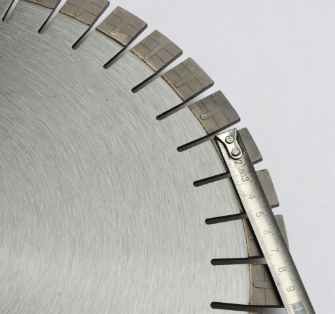
Segment height is measured at goods-in and again after the trial cut. Agreeing the measurement method up front is what turns "your blade wore out too fast" into a resolvable conversation.
Copy this into your next inquiry and fill in what you know. Leave blanks where you genuinely do not, and the supplier will know exactly which question to ask first.
1. Machine — type: ____________ · max spindle rpm: ______ · power: ______ kW / HP2. Blade size — diameter: ______ mm · bore: ______ mm · flange Ø: ______ mm3. Cut condition — wet / dry · water flow: ______ L/min · cutting depth: ______ mm4. Material — type: ____________ · strength: ______ (C__/__ or MPa/psi)5. Aggregate — type: ____________ · max stone size: ______ mm6. Reinforcement — bar Ø: ______ mm · spacing: ______ mm · mesh / mat: ______7. Geometry — segment height: ______ mm · segment width: ______ mm · rim: segmented / turbo / continuous8. Construction — laser welded / HF brazed / sintered · core: standard / silent9. Performance target — speed: ______ m/min · life: ______ m or ______ cuts · edge quality: ______ mm chip10. Compliance — destination market: ______ · EN 13236 required: Y / N · other: ______11. Commercial — annual volume: ______ pcs · trial order: ______ pcs · Incoterm + port: ______12. Packaging & brand — bulk / colour box / blister · private label: Y / N · label language: ______
The quickest way to assess a diamond saw blade supplier is to watch the questions they return. A manufacturer that works on specification will want to know machine rpm before recommending a blade, will ask about aggregate and cure state before proposing a bond, will ask how failure is defined before quoting, and will tell you when a requested combination is unsafe or unsuitable instead of accepting the order quietly.
Equally useful is what they volunteer unprompted: the standard their blade is manufactured to, the marking that will be on the product, the test records available, and the lead time they can actually hold. A supplier that publishes its factory, its process and its certifications — as we do here — is usually a supplier that expects its claims to be checked.
|
Mistake |
Likely consequence |
Fix |
|
Quote requested with diameter only |
Bond chosen by default; blade glazes or dies early |
Add machine rpm, material and wet/dry to the first email |
|
"Concrete" given as the material |
Wrong bond family for aggregate or cure state |
Add strength grade, aggregate type and age |
|
Imperial bore written as 22 mm |
Blade will not fit, or runs off-centre and cracks |
Write 22.23 mm (7/8″) exactly |
|
No performance target stated |
No basis for a warranty claim or a fair comparison |
Define cuts per blade and the test method |
|
Compliance documents requested after shipping |
Customs hold, distributor refusal, unsellable stock |
Ask for the declaration of conformity with the quote |
|
Price compared without Incoterms |
Apparent saving disappears in freight and duty |
Normalise all quotes to one Incoterm and port, then compare cost per cut |
Four data points already allow a provisional quote: the machine's maximum spindle speed in rpm, the required blade diameter and bore, the material to be cut including aggregate type and whether it is reinforced, and whether the cut is wet or dry. Everything else refines the bond, segment geometry and price.
EN 13236 is the European safety standard for superabrasive products, including diamond saw blades. It requires the manufacturer to declare a maximum operating speed, to mark the blade with nine mandatory elements, and to keep technical documentation on balance, clamping and segment retention. It is a manufacturer's declaration, not a third-party certificate, so ask for the declaration of conformity and the test records rather than a certificate that does not exist.
Give the bore in millimetres using the standard series, for example 20.00 mm, 22.23 mm (7/8 inch) or 25.40 mm (1 inch). Imperial conversions must be exact: 7/8 inch is 22.23 mm, not 22.2 mm or 22 mm. Ordering bushing rings to reduce a 25.40 mm bore to 22.23 mm is common practice for distributors serving several machine brands.
Compare cost per cut, not price per blade. Specify the test method in advance: same machine, same material, same water flow, and then record linear metres of cut, cuts per blade and the point at which the operator declares the blade finished. A cheaper blade that delivers 20 percent fewer cuts per blade is more expensive per cut.
Laser welded blades fuse the segment to the steel core metallurgically and are suitable for dry cutting and for high-speed hand-held machines. High-frequency brazed and sintered blades rely on a lower temperature joint and should be specified for wet cutting only. If your market uses petrol cutters in dry conditions, specify laser welded.
A declaration of conformity referring to EN 13236, the packing list and commercial invoice with the correct HS or HTS code, country-of-origin marking on the product and packaging, safety instructions in the language of the destination market, and on request balance and segment retention test records. Buyers in the United States should also confirm the classification and any applicable trade measures before ordering.
Send the twelve points above, even partially completed, and our engineering team will come back with a recommended bond, segment geometry and construction, together with the compliance documentation for your market.
Steven Li
Export Director at ORIDAWN (Wuhan Oridawn Technology Co., Ltd.), a manufacturer of laser welded and high-frequency welded diamond saw blades for concrete, asphalt and stone. ORIDAWN has produced diamond blades since 2016 in a 33,333 m² facility in Ezhou, Hubei, China, holds EN ISO 9001:2015 certification and exports to more than 50 countries. Steven works with importers and distributors on blade specification, compliance documentation and cost-per-cut programmes.