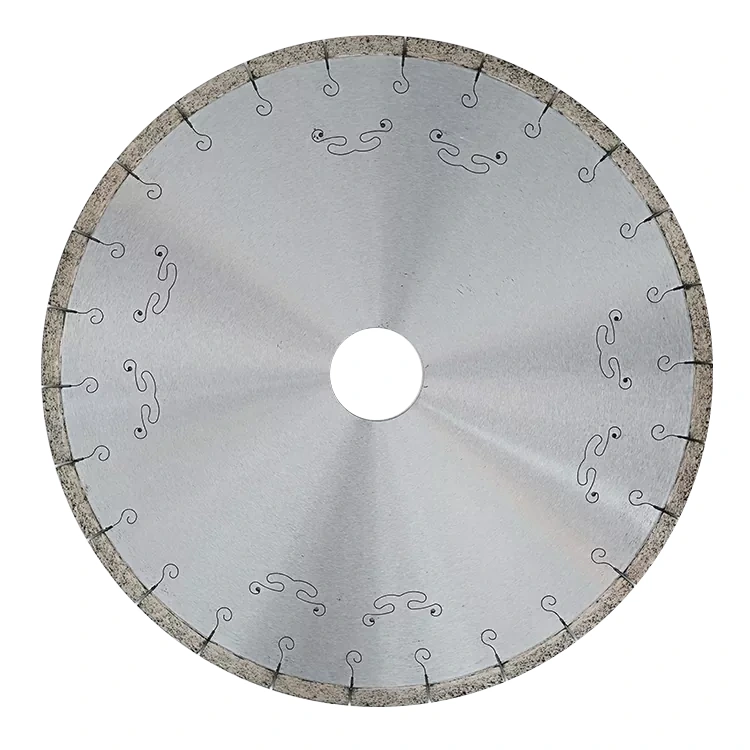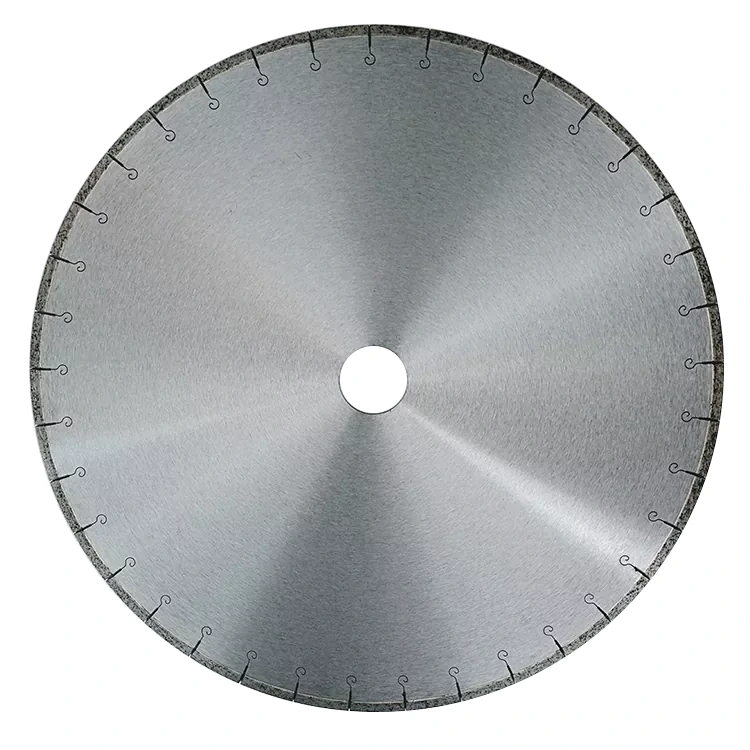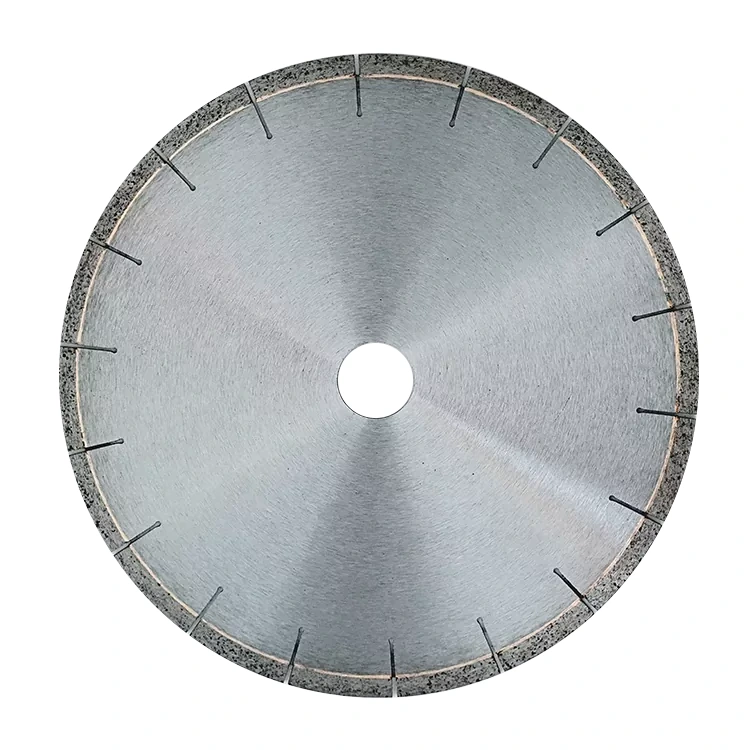

Short answer: diamond saw blade prices move mainly with four raw materials — synthetic diamond grit, the metal bond powders that hold it, the steel core, and the welding consumables that join segment to core. Diamond grit is the single biggest driver, typically accounting for 40–50% of the segment cost. When diamond, cobalt, copper or silver prices rise, blade prices follow within weeks to months.
A blade that looks identical to the naked eye can cost twice as much as another one, because the price differences sit inside the segment: diamond quality, concentration, bond formulation and welding method. This guide breaks down exactly which materials move the price, how much each one contributes, and what buyers can do about it.
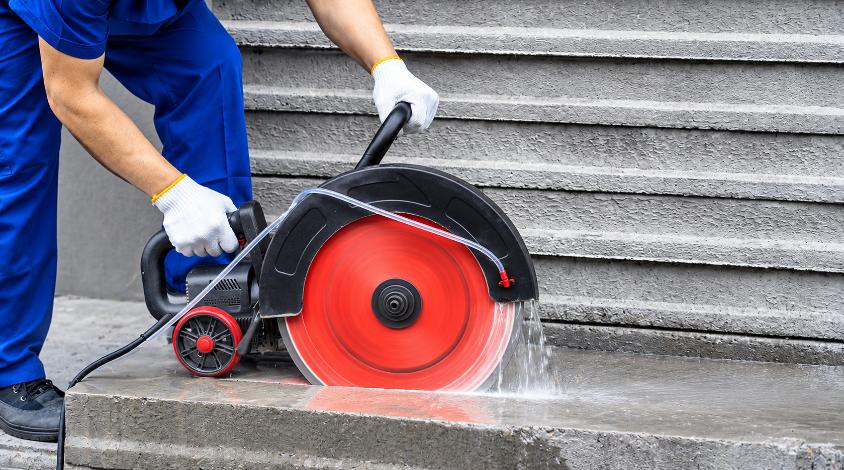
A diamond saw blade is not one material. It is a system: a steel core, a metal-matrix segment packed with synthetic diamond, and a weld that has to survive high speed and heat. Every one of those parts has a raw material input with its own price cycle.
That is why blade prices do not move in a straight line. A supplier can keep the same cutting diameter and the same segment height, yet face a completely different input cost because diamond prices tightened, cobalt spiked, or silver used in brazing went up. Understanding the input side turns a confusing price change into a predictable one.
Synthetic diamond is the functional cutting agent. Its price is driven by crystal quality, particle size, strength and supply capacity — most of which is concentrated in a few large producing regions. It is the largest single line in the segment cost, and the one buyers most often ignore.
Higher grade, blocky crystals with strong thermal stability cost more, but they hold their cutting edge longer in hard abrasive stone. Cheaper friable grit may cut fast at first and disappear early. The price difference is real, and it shows up in service life.
| Grit Factor | What Changes | Effect on Blade Price |
|---|---|---|
| Crystal strength / type | Blocky, high-strength vs. friable low-grade grit | High — premium grit can double segment cost |
| Mesh size | Coarse (30/40) to fine (80/100) | Medium — fine grades cost more to produce |
| Diamond concentration | 30% to 100% nominal concentration | High — more diamond per segment, higher price |
| Coating / treatment | Untreated vs. titanium or nickel coated | Medium — coating improves retention in the bond |
Typical cost shares are industry ranges; actual figures vary by blade specification and supplier.
The bond is the metal matrix that holds the diamond. Its job is to wear at the right rate so fresh diamond is continuously exposed. The metals used — cobalt, copper, nickel, iron and their pre-alloyed powders — are traded commodities, and their prices move with mining output, energy costs and industrial demand.
Cobalt is the most price-sensitive input. It improves bond strength and diamond retention, but its supply is geographically concentrated and historically volatile. Copper and nickel are more liquid but still swing with global manufacturing cycles. Iron-based pre-alloys are cheaper and are widely used where extreme retention is not required.
| Bond Metal | Role in the Segment | Price Sensitivity |
|---|---|---|
| Cobalt (Co) | Strong diamond retention, heat resistance | Very high — concentrated supply, sharp historical spikes |
| Copper (Cu) | Bonding, thermal conductivity, sintering behavior | Moderate to high — global industrial demand |
| Nickel (Ni) | Strength and corrosion resistance | Moderate to high |
| Iron / pre-alloys | Low-cost bond base, adjustable wear rate | Low to moderate |
| Tungsten carbide / others | Special wear-resistant formulations | High, used in smaller volumes |
This is why a "soft bond for granite" and a "hard bond for marble" quote can differ. The formulation is not a label — it is a different mix of metals at different commodity prices.
The steel core is the body of the blade. Its price tracks steel and flatness tolerances: a core that is laser-cut, tensioned and flatness-checked costs more than a stamped blank. On large-diameter blades the core can be a meaningful share of the total price.
The weld is the smaller line item that causes the biggest safety difference. Laser welding creates a strong metallurgical bond without filler metal, which is why it is preferred for dry and high-speed cutting. Silver brazing uses silver-containing filler alloy — so when silver prices rise, brazed blade costs rise too.
| Component | Cheaper Option | Higher-Cost Option | Price Effect |
|---|---|---|---|
| Steel core | Stamped blank, basic tensioning | Laser-cut, tensioned, flatness-verified | Medium to high on large diameters |
| Joining method | Silver brazing | Laser welding | Medium — equipment and process control |
| Filler consumable | Lower-silver alloy | High-silver or specialty alloy | Moderate, tracks silver market |
| Inspection | Visual check | Weld strength and balance testing | Low to medium, but affects consistency |
Concentration describes how much diamond is packed into the segment volume. A 30% concentration blade holds far less diamond than a 100% one, even if both look the same from the outside. That difference is pure material cost.
More diamond is not automatically better. Hard, abrasive stone benefits from higher concentration and a bond that releases grit steadily. Softer material may cut fine with less diamond and a harder bond. Paying for concentration you do not need is wasted money; under-specifying it means frequent replacement. This is the same mechanism behind the wide price spread discussed in our guide to why same-size blades cost very different prices.
| Concentration | Typical Use | Relative Diamond Cost |
|---|---|---|
| Low (20–30%) | Soft stone, light-duty, short runs | Low |
| Medium (40–60%) | General granite and concrete cutting | Medium |
| High (70–100%) | Hard abrasive stone, long production runs | High |
For a standard diamond segment, a reasonable industry approximation looks like this. Use it as a mental model, not as a supplier quote — the exact split changes with diameter, concentration and bond system.
| Cost Component | Typical Share of Segment Cost | Volatility |
|---|---|---|
| Synthetic diamond grit | 40–50% | High |
| Metal bond powders | 25–35% | High (cobalt-driven) |
| Steel core / blank | 10–20% (higher on big diameters) | Moderate |
| Welding and consumables | 5–10% | Moderate (silver-driven) |
| Processing, labor, QC, overhead | 5–15% | Low to moderate |
Ranges are illustrative industry estimates. Request a bill-of-material breakdown from your supplier for figures that apply to your blade.
Raw material prices do not move randomly. Four forces show up repeatedly:
The practical consequence: a stable-looking blade SKU can still get a price revision. Ask which input moved, not just "why did the price go up".
You cannot control commodity markets. You can control how you buy.
For a framework on comparing quotes properly, see our buyer data checklist for diamond blade quotes.
Synthetic diamond grit. It typically represents 40–50% of the segment cost, and its price depends on crystal quality, particle size and concentration. Two blades of the same diameter can differ sharply in price because one contains more or better diamond.
Cobalt is a key metal in the bond matrix that holds the diamond. It improves retention and heat resistance. Because cobalt supply is geographically concentrated and historically volatile, a price spike raises the cost of cobalt-containing bonds and therefore the finished blade.
No. Higher concentration means more diamond and a higher price, but the right level depends on the material. Hard abrasive stone benefits from high concentration; softer material may perform well with a lower concentration and a harder bond. Match the specification to the job.
Laser welding forms a strong metallurgical bond without filler metal and requires controlled equipment and inspection. Brazed blades use silver-containing filler alloy, so their cost tracks the silver market. Laser welding is preferred for dry and high-speed cutting where segment detachment is a safety risk.
Ask for the specification: diamond type and concentration, bond hardness, core treatment and welding method. If a supplier cannot state these, the lower price is likely a material downgrade. Test any alternative on your own material and compare cost per cut, not just purchase price.
Diamond saw blade prices fluctuate because the materials inside them are commodities. Diamond grit leads the cost, bond metals — especially cobalt — drive most of the volatility, and steel and welding consumables add their own cycles. Once you know which input moved, a price change stops being a mystery.
The right response is not to chase the cheapest blade. It is to specify the grade, concentration, bond and welding method your job actually needs, lock that specification into the order, and compare suppliers on cost per cut.
Oridawn is a diamond saw blade manufacturer founded in 2016, with ISO 9001 production and blades exported to more than 50 countries. Tell us your material, machine and target output, and we will recommend a specification with the material breakdown behind it.
-