
Most operators blame the blade when service life drops. In reality, the everyday habits on the shop floor quietly cut blade life in half. Here is what they are — and how to fix them.
After auditing dozens of stone shops across granite, quartz, and porcelain production lines, OriDawn's engineering team found the same pattern: roughly 70% of premature blade wear is caused not by the product, but by five small operating mistakes that almost no one notices until it is too late.
The good news? Every one of them is fixable today, with no extra equipment and no extra cost.
Key Takeaways:
Excessive feed pressure and poor cooling are the #1 killers of diamond saw blade life;
Wrong blade specification can cut life by 30–50%;
Running at the wrong RPM silently polishes the diamond segments — a common "invisible" failure mode;
A 30-second visual inspection before every shift prevents 80% of unexpected downtime.
A well-maintained diamond saw blade can outlast several cheap ones — operating habits are usually the deciding factor.
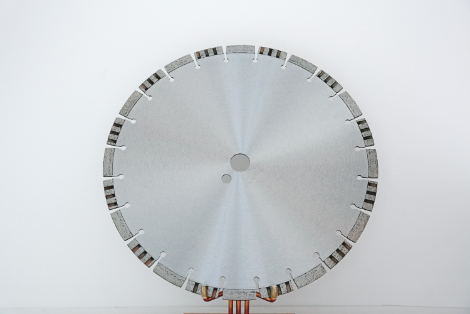
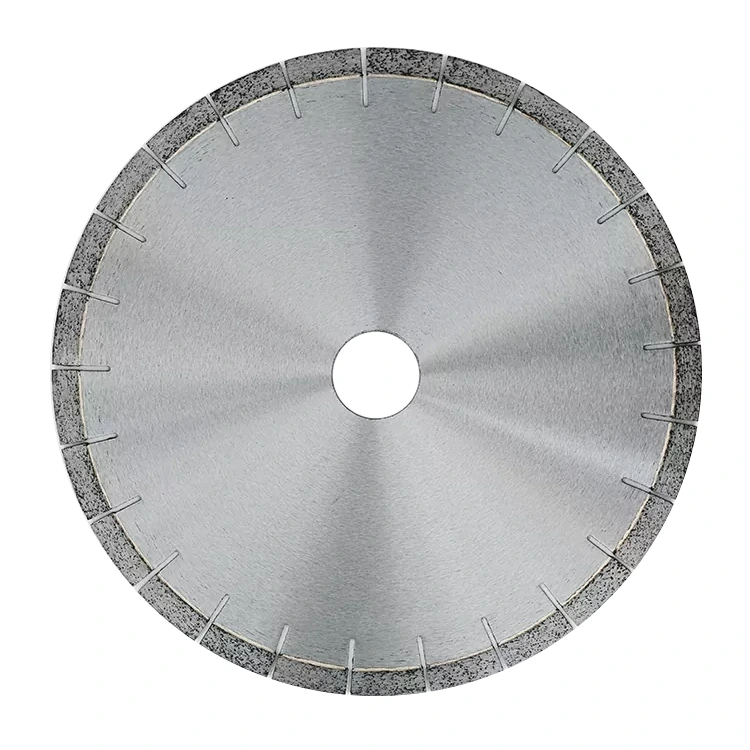
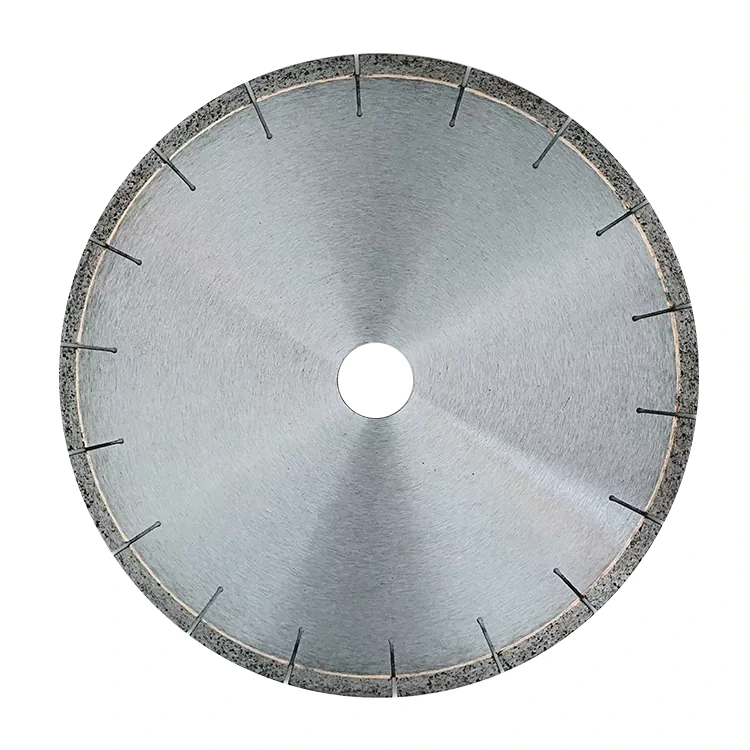
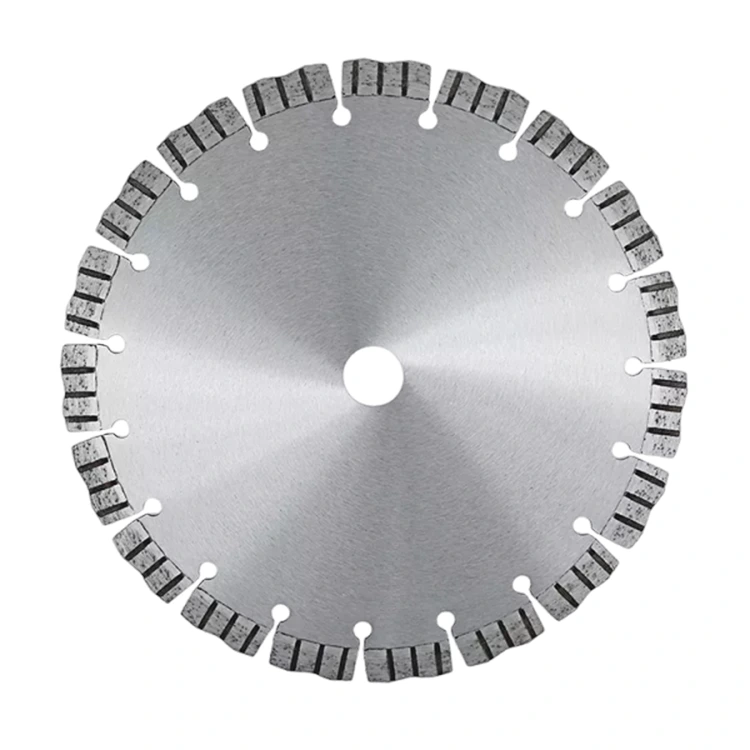
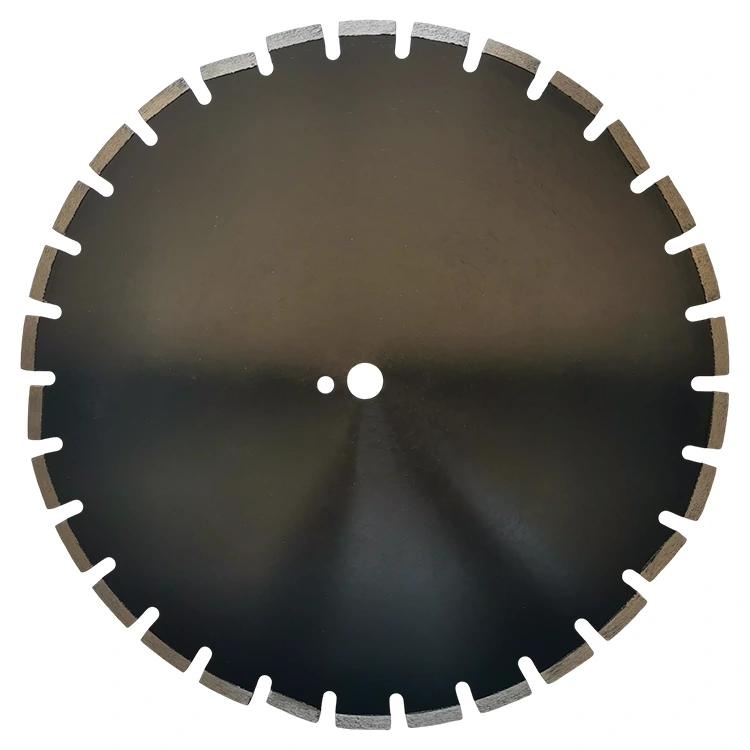
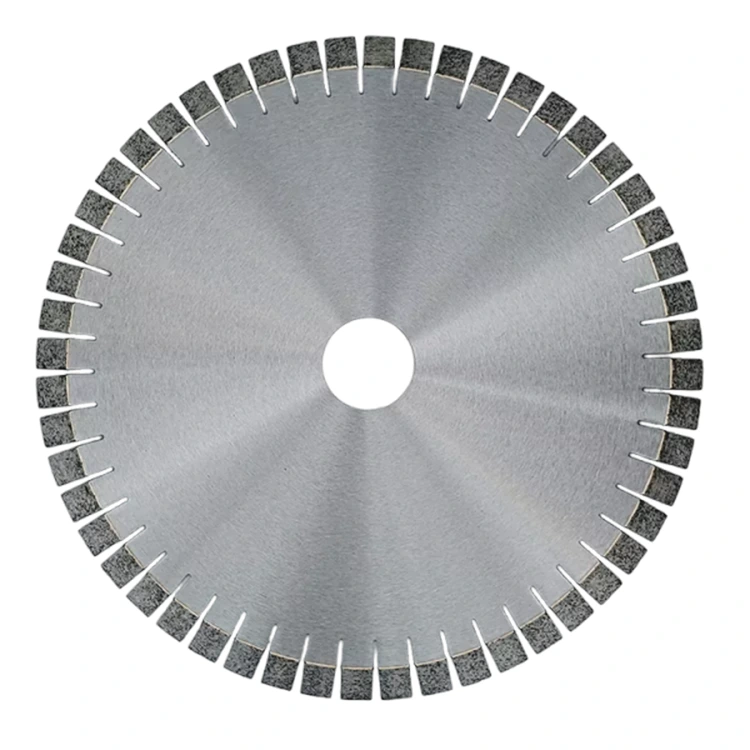
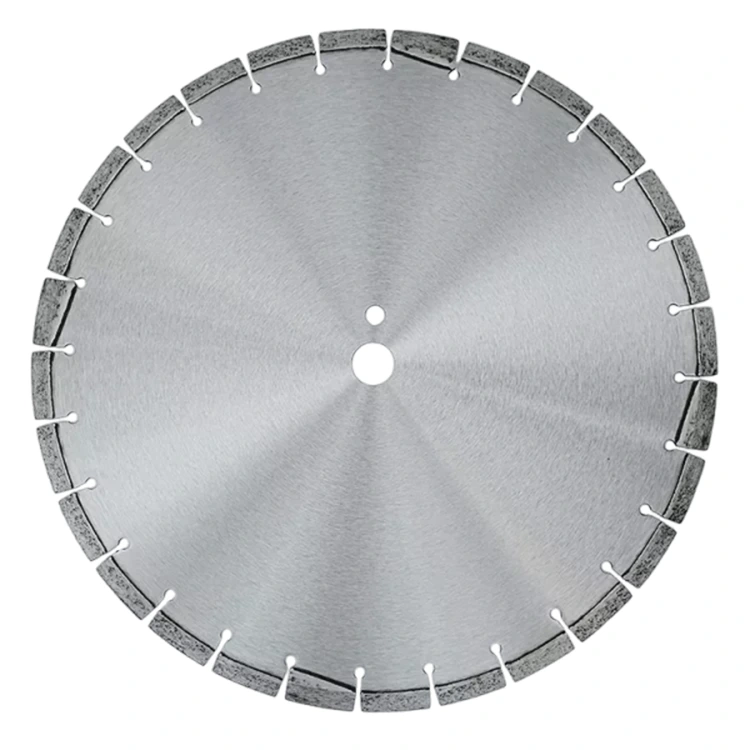
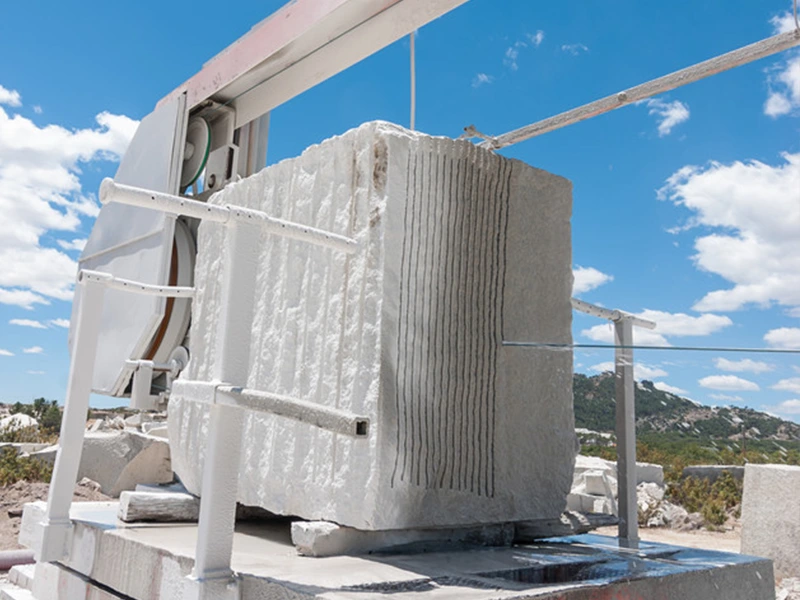
The blade below was discarded after only three weeks of use—due to one or more of the following five mistakes.
1. Why Blade Life Drops Without Warning
2. Mistake #1 — Using Excessive Cutting Pressure
3. Mistake #2 — Ignoring Proper Cooling
4. Mistake #3 — Choosing the Wrong Blade for the Material
5. Mistake #4 — Operating at the Wrong Speed
6. Mistake #5 — Skipping Regular Inspection
7. Quick Comparison: Right vs. Wrong Practice
8. FAQ — Diamond Saw Blade Life
9. Conclusion & How OriDawn Can Help
Every stone processor wants one thing from a diamond saw blade: long, consistent service life. Yet the same complaint keeps coming back — "the blade wore out too fast."
After auditing dozens of stone shops across granite, quartz, and porcelain production lines, OriDawn's engineering team found the same pattern: roughly 70% of premature blade wear is caused not by the product, but by five small operating mistakes that almost no one notices until it is too late.
The good news? Every one of them is fixable today, with no extra equipment and no extra cost.
It is the most common mistake on the floor. An operator sees the cut slowing down, leans on the handle, and pushes harder. It feels productive. It is actually destroying the blade.
When feed pressure exceeds what the diamond segments can handle, three things happen at the same time:
· Segment stress fracture: the metal bond cracks before diamonds are fully exposed.
· Heat spike: friction at the cut zone rises >200°C, weakening the bond.
· Core deformation: the steel core flexes, causing permanent runout (wobble).
A diamond saw blade is designed to cut with its own sharpness — not the operator's body weight.
What to do instead:
· Maintain a steady, moderate feed rate — the spindle ampere should stay in the green zone.
· If the cut stalls, lift the blade, re-check water flow, then retry. Do not push harder.
· Use a feed indicator or amp meter if your machine has one — a 10% overload can halve segment life.
Heat is the silent enemy of every diamond cutting tool. The interface between diamond and stone can briefly exceed 700°C in a dry cut — well above the tempering range of the metal bond.
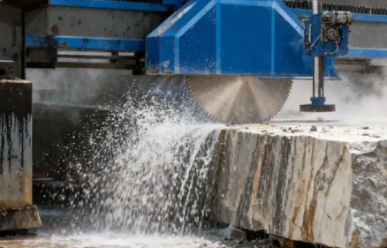
Without enough water, you will see the symptoms in this order:
1. Discoloration on the segment surface (blue or purple tint).
1. Premature diamond pull-out — the grit falls out before it is fully used.
1. Segment undercut or cracking at the bond line.
1. Complete segment loss during a heavy cut.
|
Material |
Minimum Water Flow |
Cooling Method |
|
Granite |
15 L/min |
Side & top flood, both sides of the cut |
|
Quartz / Engineered Stone |
12–15 L/min |
Flood on both sides, no recycling of dirty water |
|
Marble |
10 L/min |
Gentle flood, avoid high-pressure jet |
|
Porcelain slab |
15–20 L/min |
Continuous flood, anti-chipping mode |
|
Concrete / Brick |
10–12 L/min |
Flood or wet/dry hybrid |
For dry cutting, blades are designed for intermittent cuts only — 30 to 60 seconds of cut, then 20 seconds of air cooling. Continuous dry cutting voids most warranties.
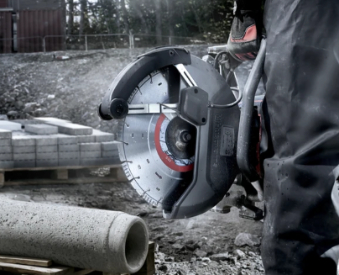
Every stone cutting blade is engineered around a specific bond hardness, diamond concentration, and segment shape. Using a granite blade on porcelain — or a marble blade on quartz — is one of the most expensive shortcuts in stone processing.
· Granite — hard, abrasive. Use a softer bond with high diamond concentration to keep the segment self-sharpening.
· Quartz / Engineered stone — dense and resin-bound. Use a medium bond with anti-chipping segment geometry.
· Marble — soft and clean-cutting. Use a hard bond with continuous rim or narrow turbo segments.
· Porcelain slab — brittle, prone to chipping. Use a reinforced thin turbo with a fine diamond grit.
· Concrete / Brick — variable hardness, often with rebar. Use a tough bond with wide gullets to clear debris.
Pro Tip: If your blade is polishing (the segments turn shiny and stop cutting), your bond is too hard for the material. If it wears down in a few cuts, the bond is too soft. A supplier should be able to fine-tune the formulation in 1–2 weeks.
Every diamond saw blade is rated for a specific peripheral speed (usually 35–50 m/s). The label is not a suggestion — it is the result of careful engineering.
· Too high RPM → heat builds up, the bond softens, diamonds pull out early.
· Too low RPM → the segment polishes (becomes smooth and shiny), the operator pushes harder, and the blade is damaged by overload.
|
Blade Diameter |
Recommended RPM Range |
Typical Application |
|
250 mm (10") |
2,800 – 3,200 |
Handheld grinder, tile saw |
|
350 mm (14") |
2,000 – 2,400 |
Bridge saw, portable saw |
|
400 mm (16") |
1,800 – 2,200 |
Bridge saw, slab saw |
|
500 mm (20") |
1,400 – 1,800 |
Multi-blade block saw |
|
600 mm (24") |
1,200 – 1,500 |
Block saw, large bridge |
|
800 mm (32") |
900 – 1,100 |
Block / quarry saw |
|
1000 mm (40") |
700 – 900 |
Quarry saw, gantry saw |
When in doubt, check the supplier's data sheet — or simply measure the spindle speed with a tachometer. A 10% deviation is enough to halve blade life.
The most expensive repair in a stone shop is the one that happens at 2 a.m. — a blade that fails mid-shift, taking a slab and half a day of production with it.
Almost every mid-shift failure has a visible warning sign days in advance. The trick is to look.

A 30-second habit, repeated 5 days a week, prevents nearly all unscheduled blade swaps.
|
Area |
❌ Wrong Practice |
✅ Right Practice |
|
Feed pressure |
Push hard to speed up |
Steady, moderate feed; let the blade cut |
|
Cooling water |
Low flow to keep floor dry |
10–20 L/min continuous flood |
|
Blade selection |
One blade for every material |
Matched bond & grit per material |
|
Speed |
Maximum RPM regardless of spec |
RPM per supplier data sheet |
|
Inspection |
Wait for failure |
30-second pre-shift check |
1. What shortens diamond saw blade life the most?
Excessive cutting pressure and poor cooling. Both create heat and mechanical stress that wear diamond segments far faster than normal use. Wrong blade specification and incorrect RPM compound the damage.
2. How can I extend diamond saw blade life?
Maintain a steady feed rate, ensure constant water flow, match the blade specification to the material, run at the manufacturer-recommended RPM, and inspect the blade regularly for segment wear, flat spots, and core deformation.
3. What is the ideal RPM for a diamond saw blade?
There is no single universal RPM. It depends on blade diameter, material hardness, and machine type. Always follow the RPM printed on the blade label or in the supplier's technical sheet.
4. Is water cooling necessary for diamond saw blades?
Yes — for any wet-cutting blade, a stable water supply of at least 10–15 L/min is required at the cut zone. Dry-cutting blades are designed for intermittent use only and need air cooling between cuts.
5. How often should I inspect a diamond saw blade?
A quick visual check should be done before every shift. A full inspection — segment wear, flat spots, core runout, arbor fit — should be done at least weekly, or every 40 hours of cutting, whichever comes first.
Conclusion & How OriDawn Can Help
The service life of a diamond saw blade depends on two things: the quality of the manufacturing and the way it is used. Most premature wear comes from the second factor — and it is the one you can fully control.
By avoiding excessive pressure, maintaining stable cooling, selecting the correct specification, and following the recommended operating parameters, you can extend blade life by 30–80% — and cut your per-square-meter cost at the same time.
OriDawn Tech supplies professional diamond saw blades and cutting tools for granite, quartz, marble, porcelain slabs, concrete, and engineered stone. Every blade is matched to a specific material, with technical data and feed parameters printed on the label.